



Concrete Paving Contractor
Concrete paving across North Carolina — parking lots, drive aisles, loading areas, and access roads as an alternative or complement to asphalt. Jointed plain concrete pavement design, thickness by traffic class, drainage crown across the lot. Zero deposit, licensed and insured, certificate of insurance on file.
Get your free quote
We respond in less than 2 hours.
Recent Paving Projects
Real customer jobs we've poured. Swipe through and picture yours next.
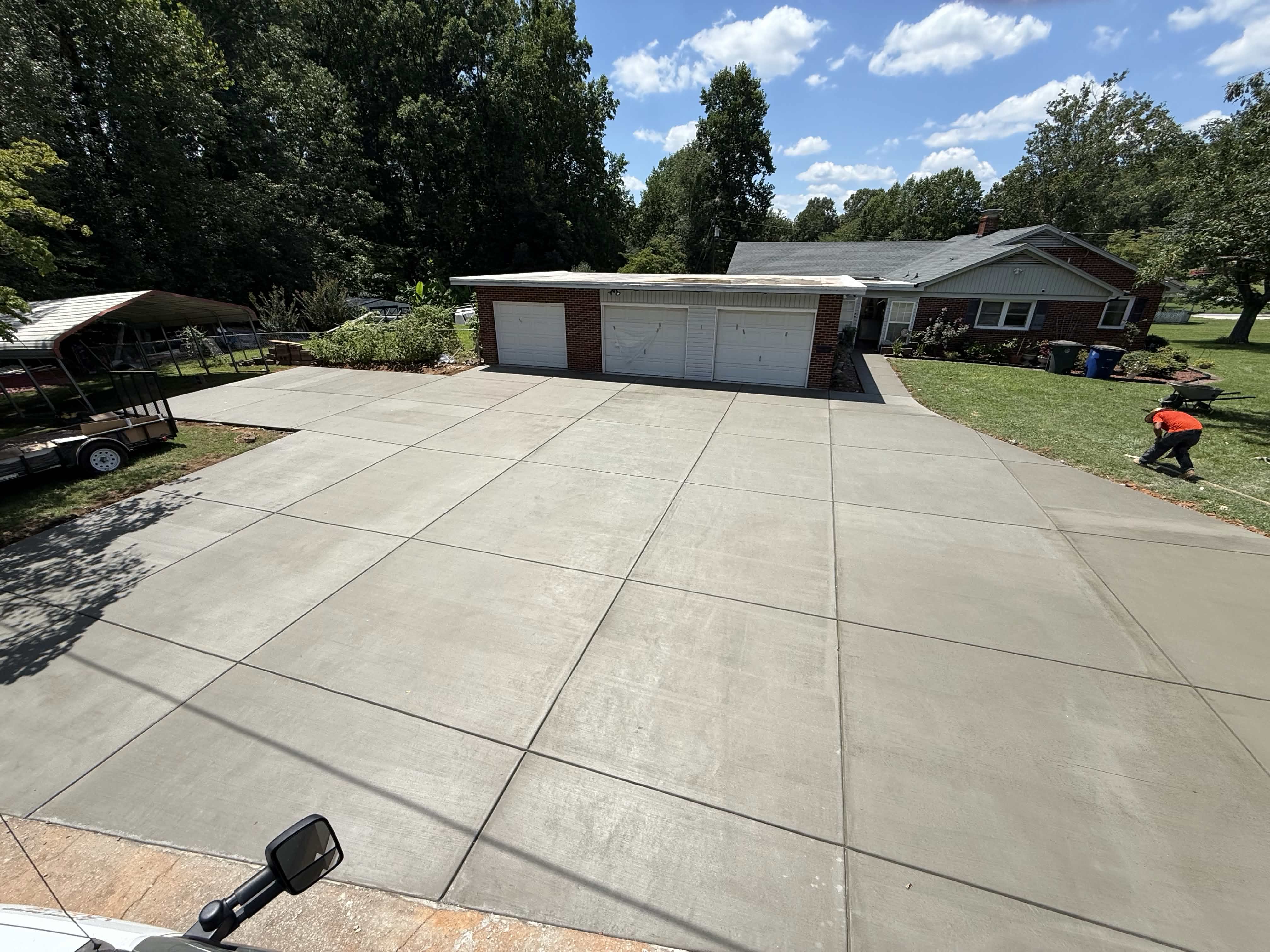
Paving
Recent Job
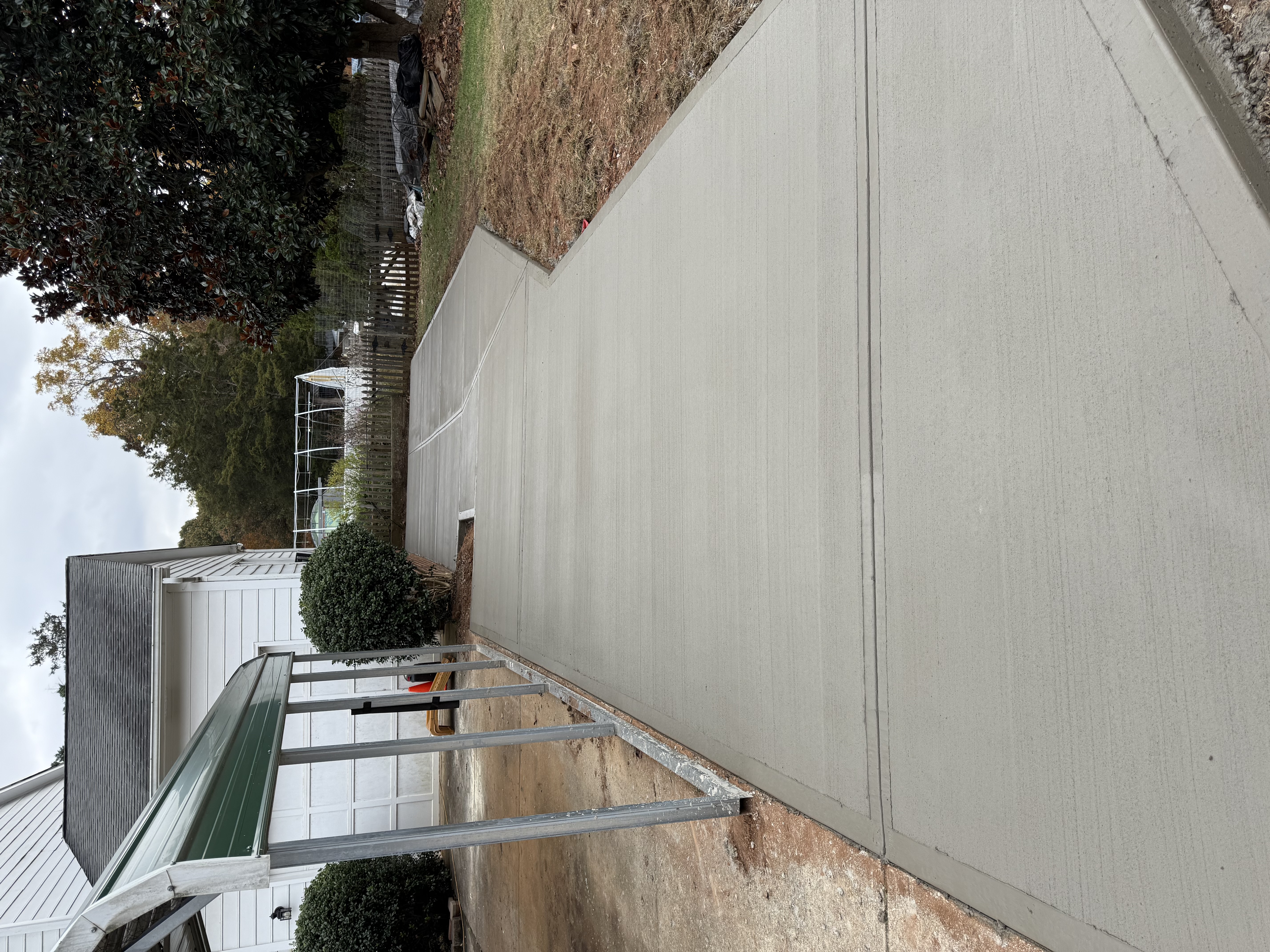
Paving
Recent Job
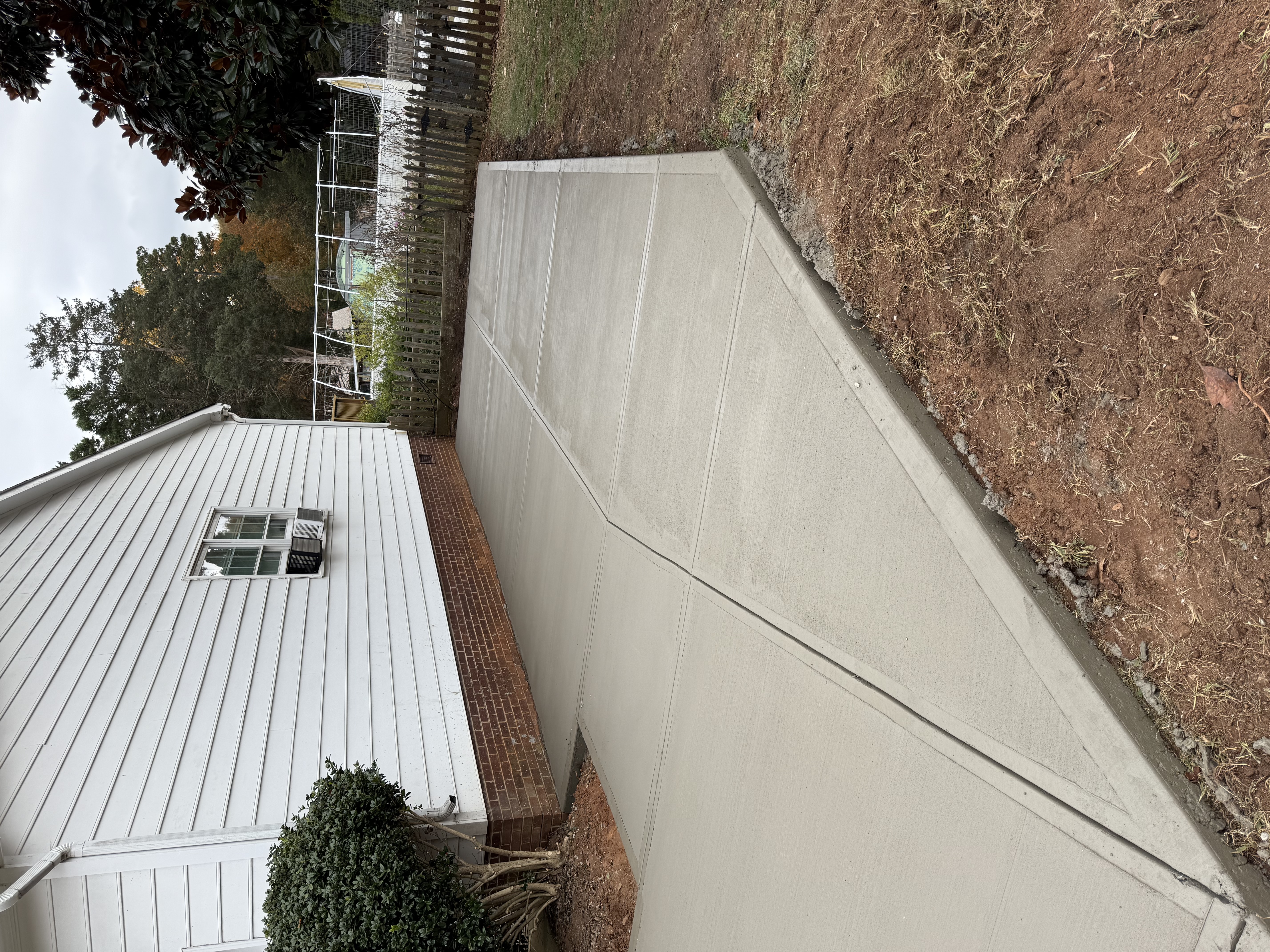
Paving
Recent Job
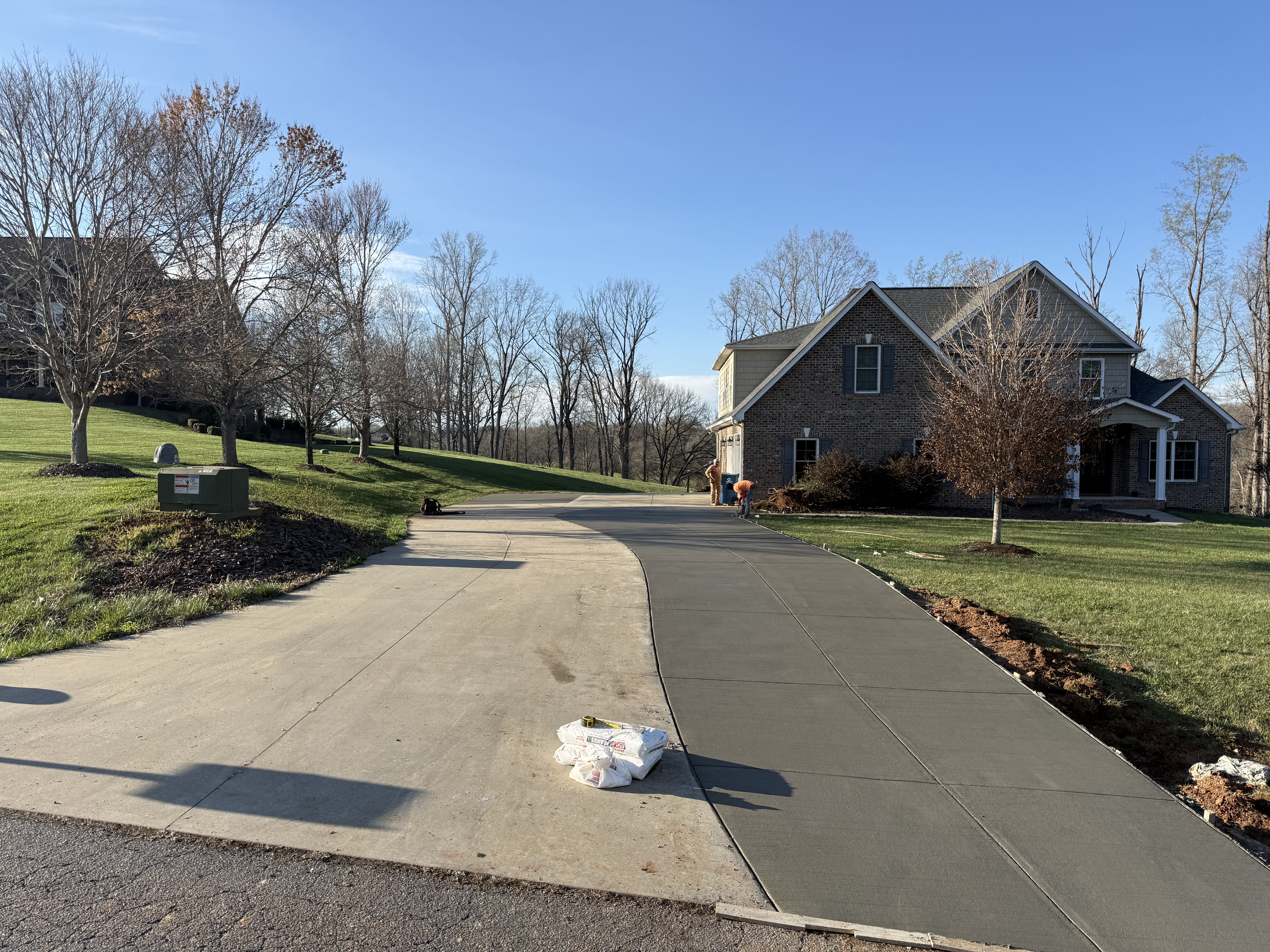
Paving
Recent Job
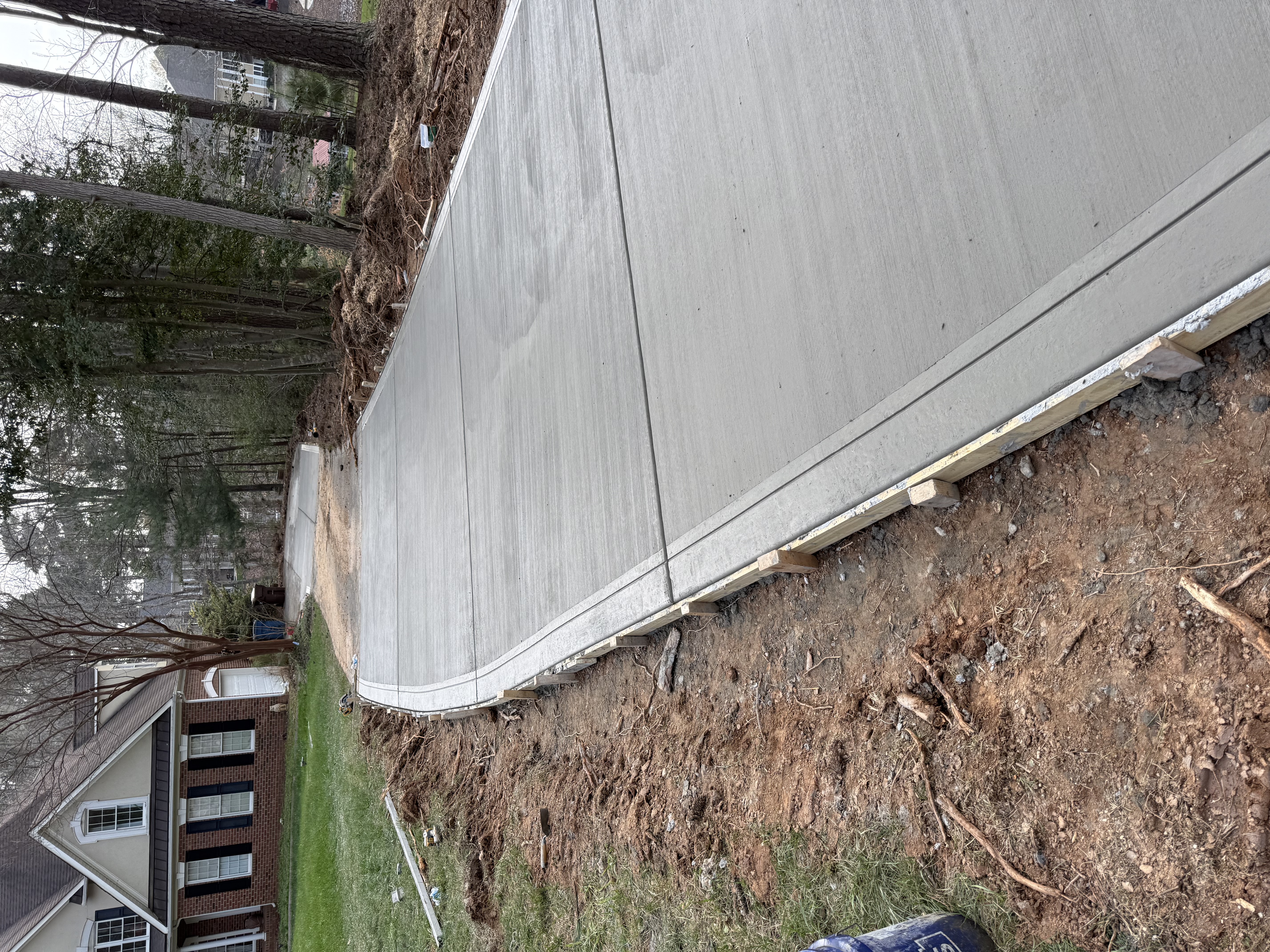
Paving
Recent Job
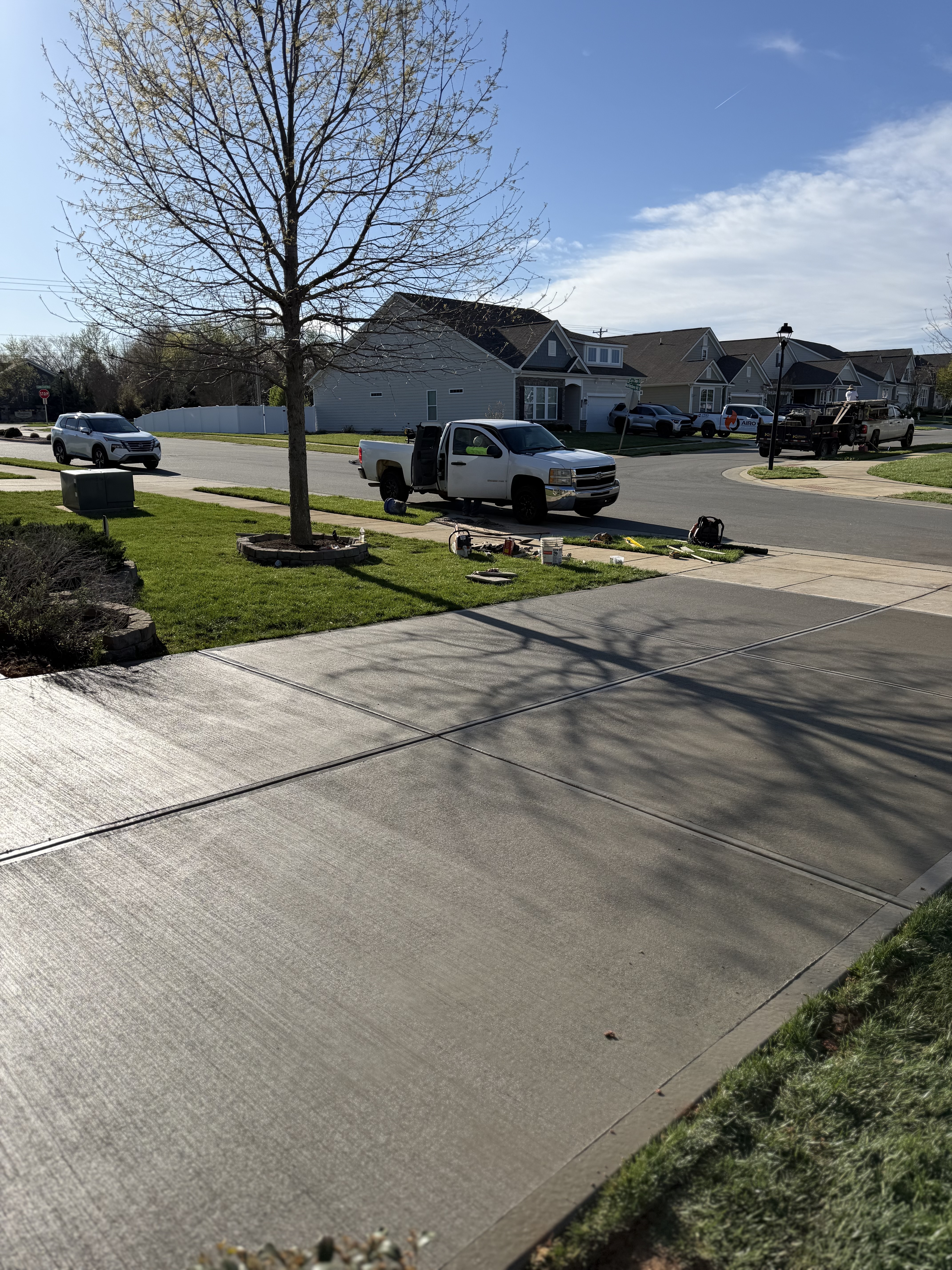
Paving
Recent Job
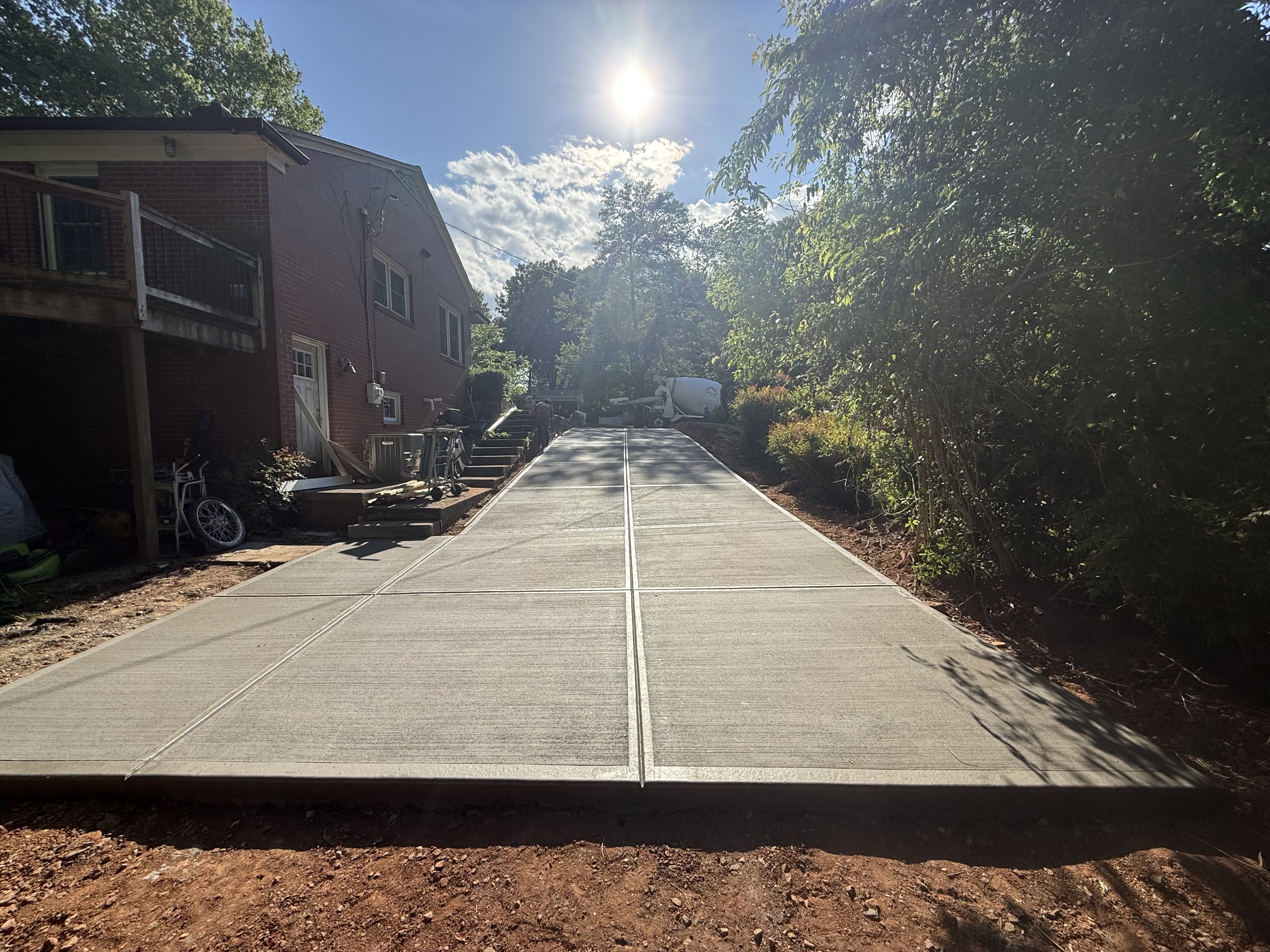
Paving
Recent Job
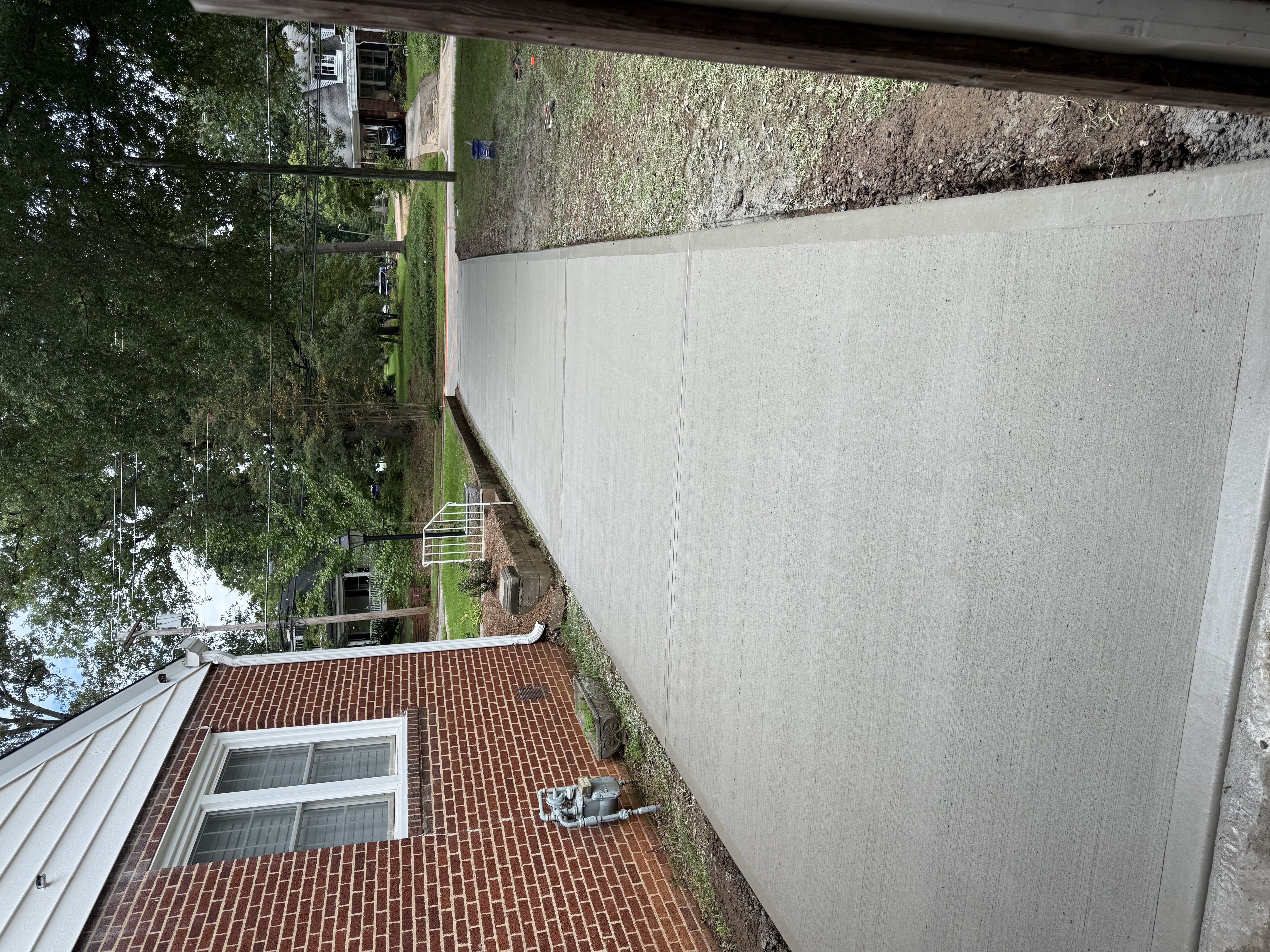
Paving
Recent Job
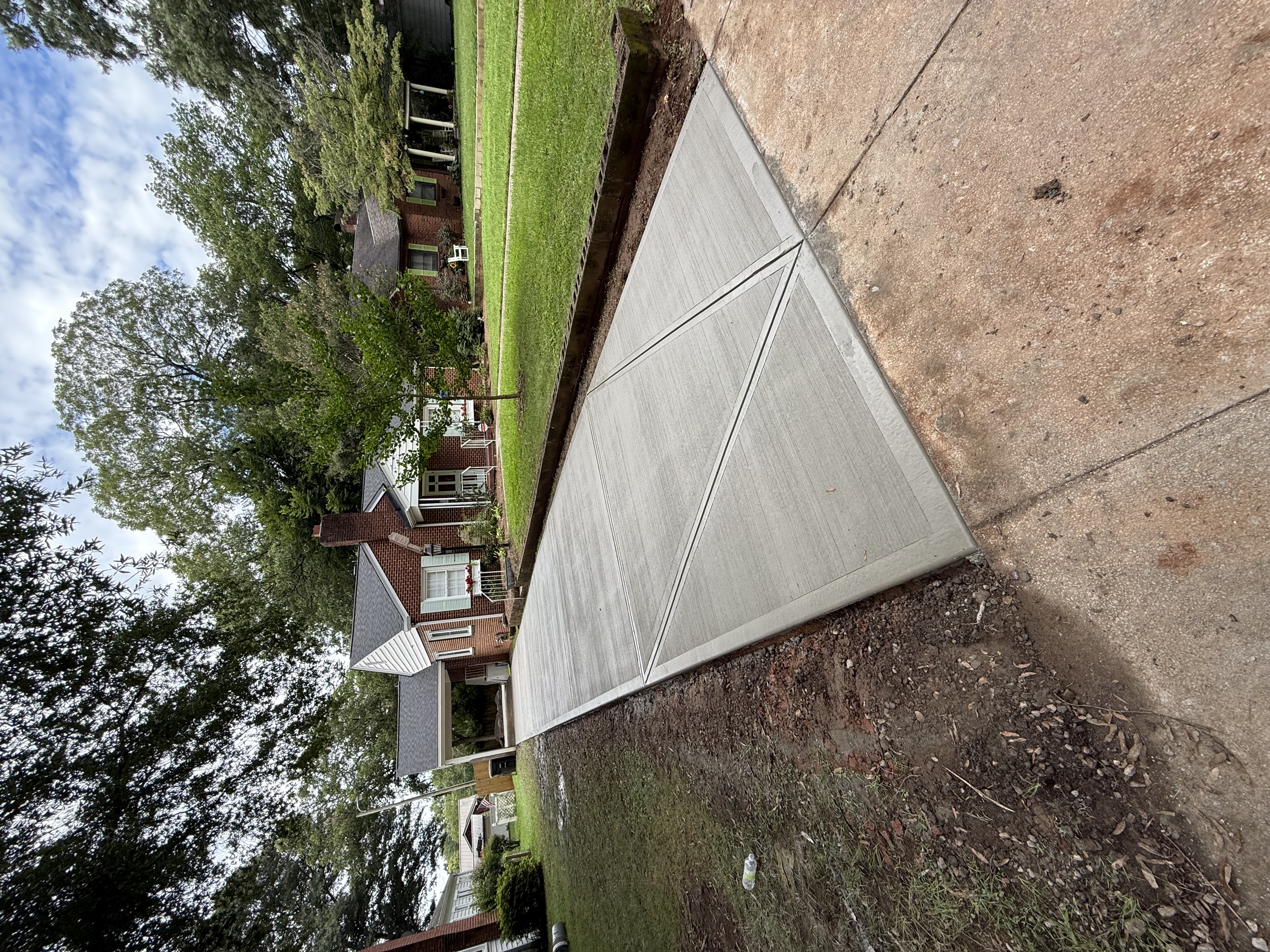
Paving
Recent Job
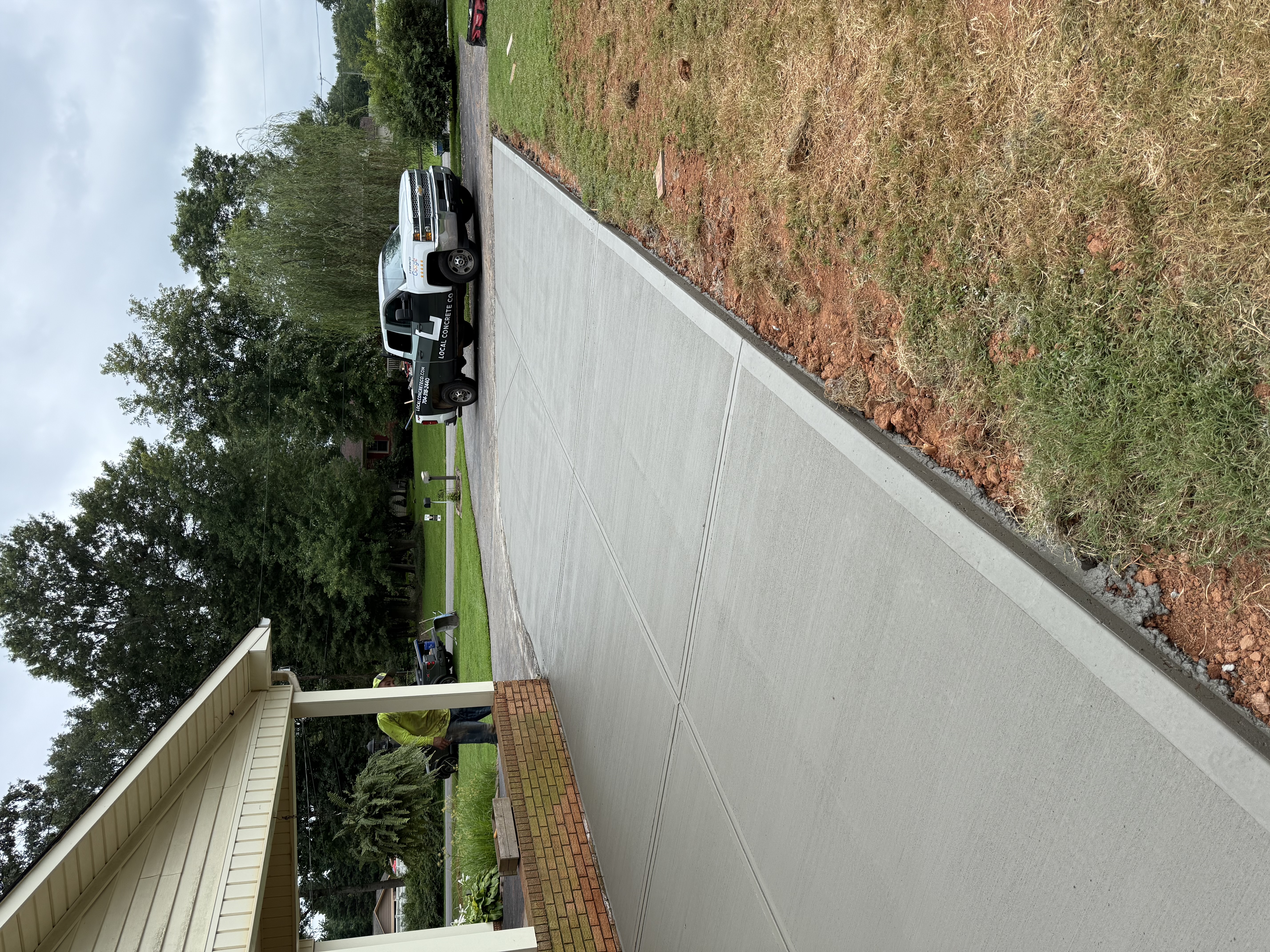
Paving
Recent Job
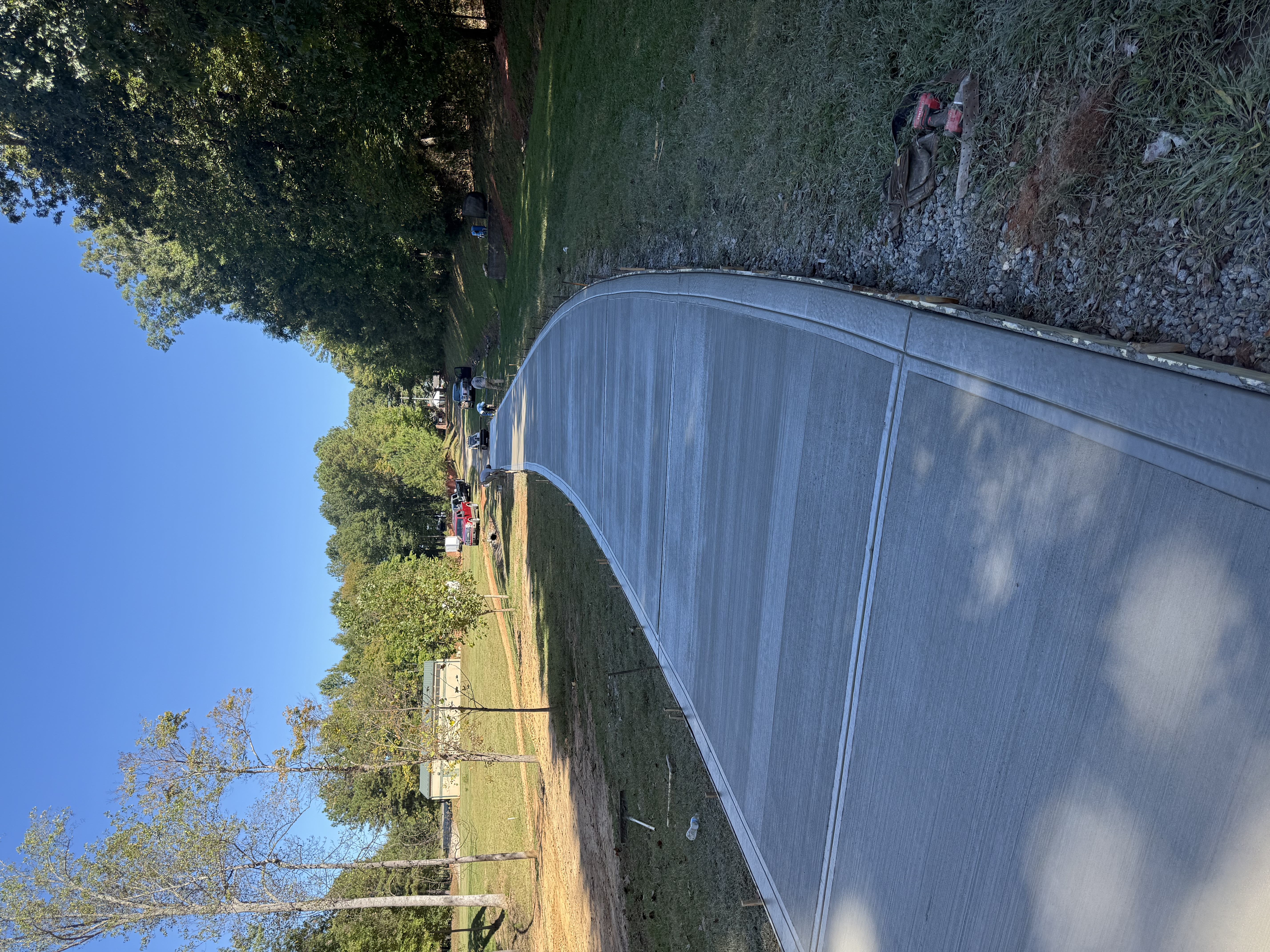
Paving
Recent Job
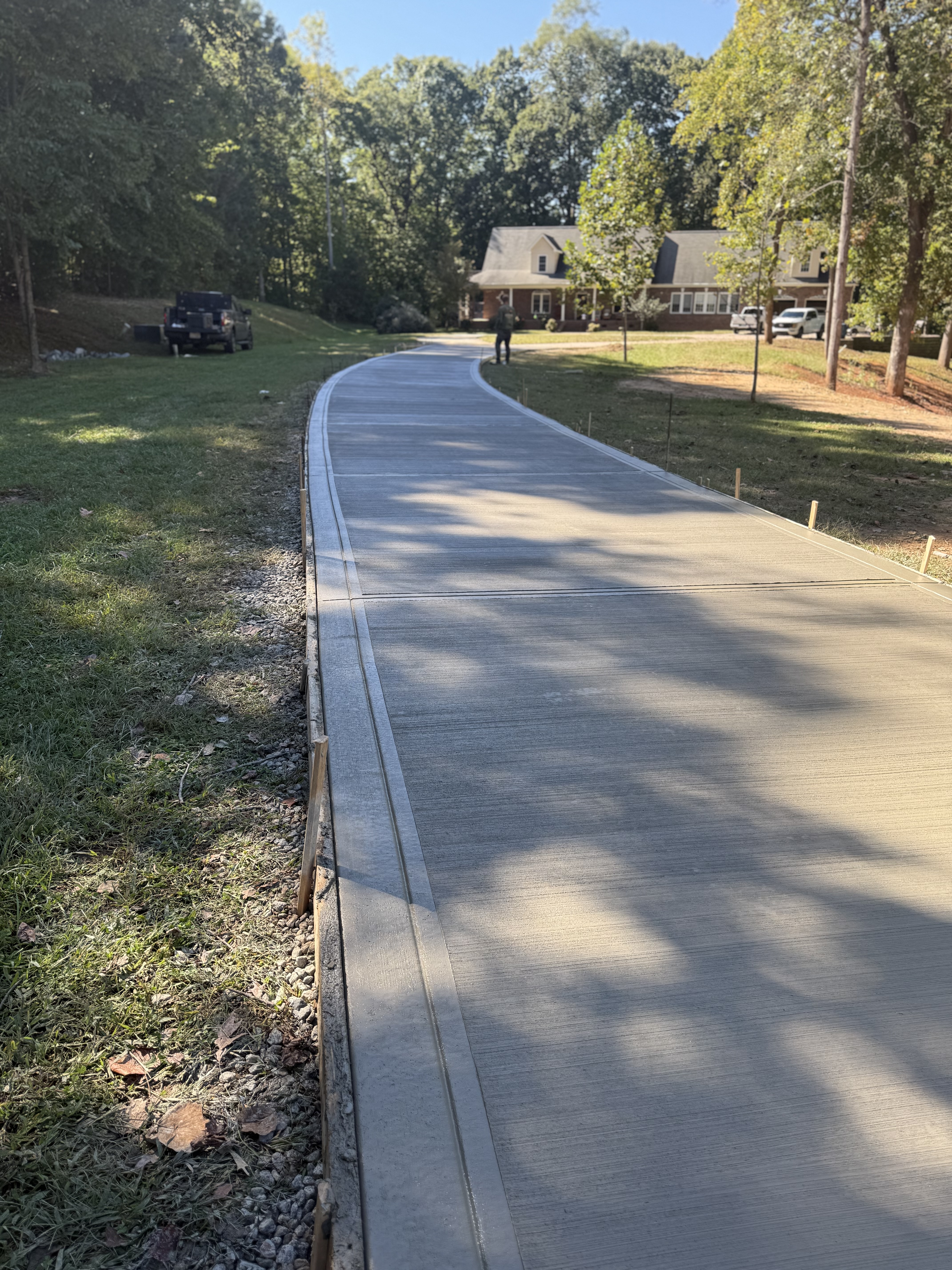
Paving
Recent Job
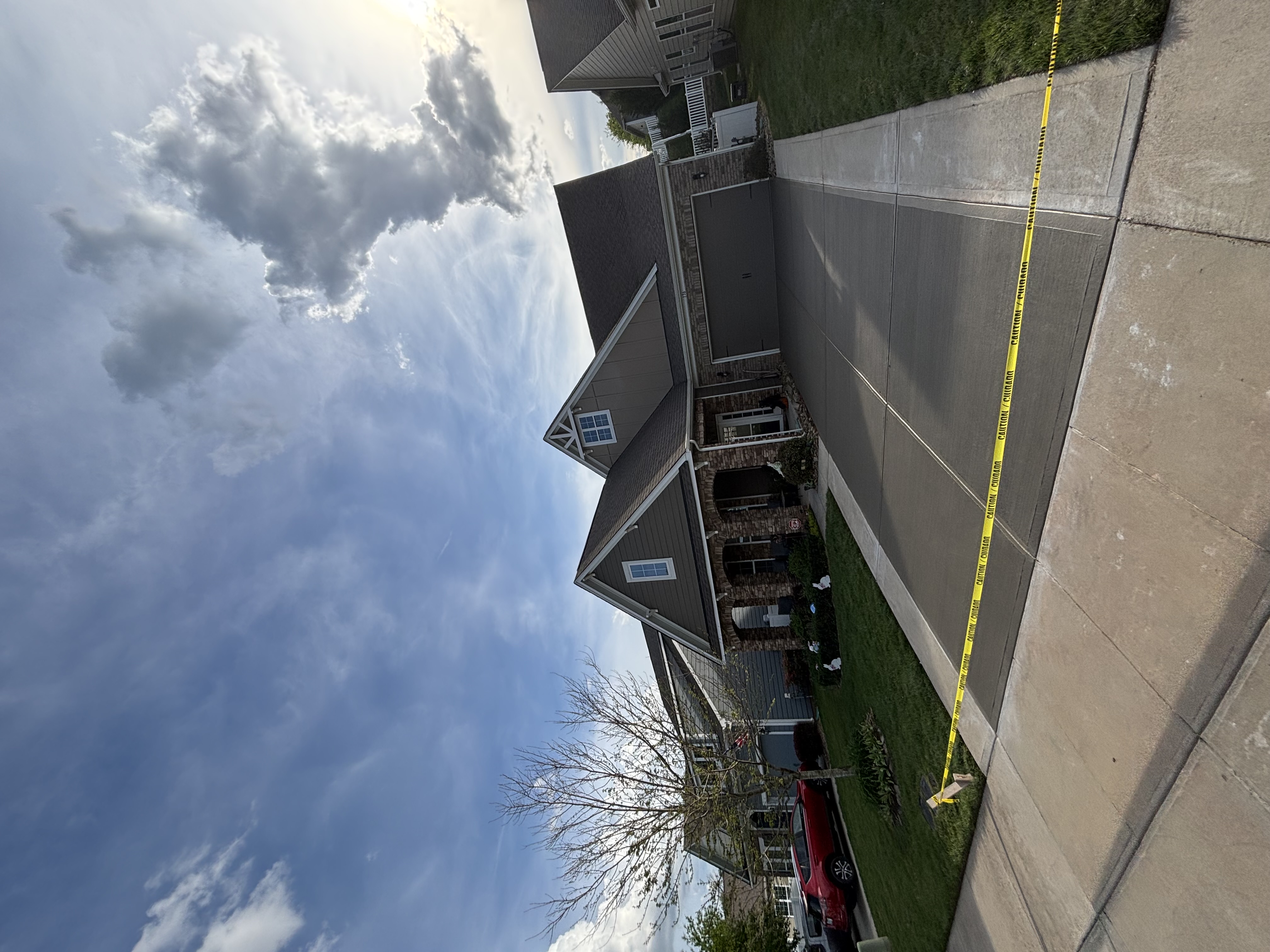
Paving
Recent Job
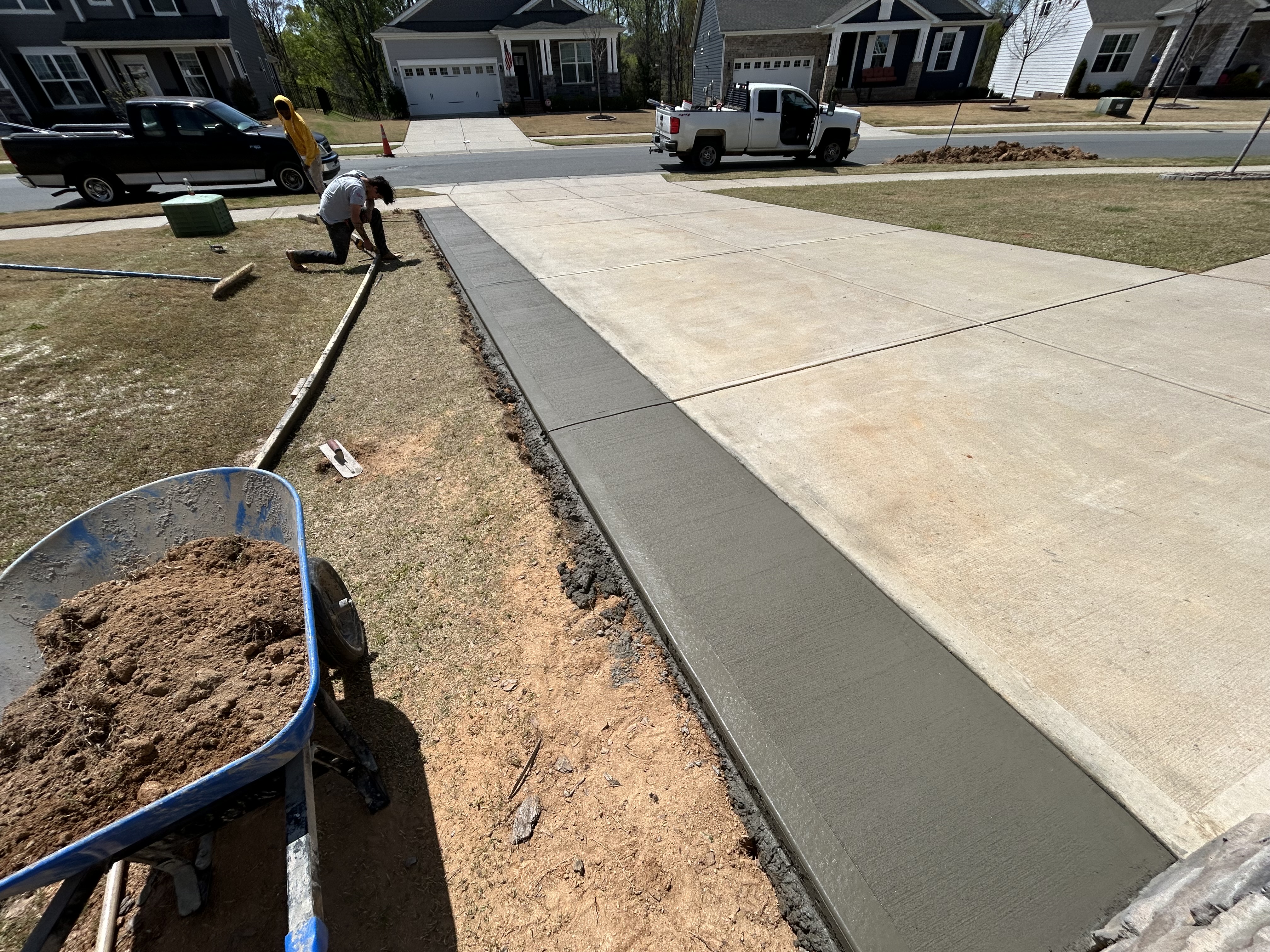
Paving
Recent Job
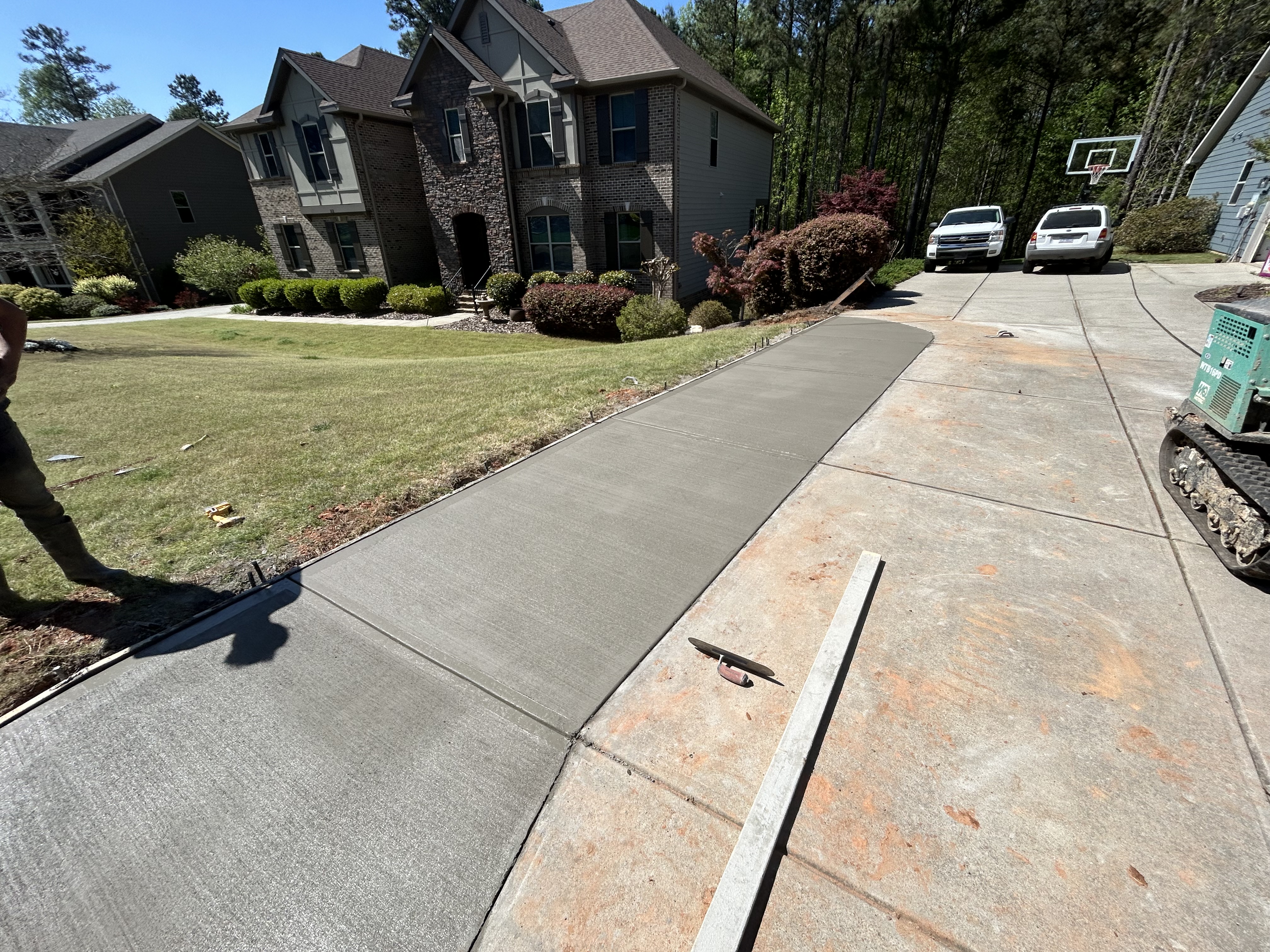
Paving
Recent Job
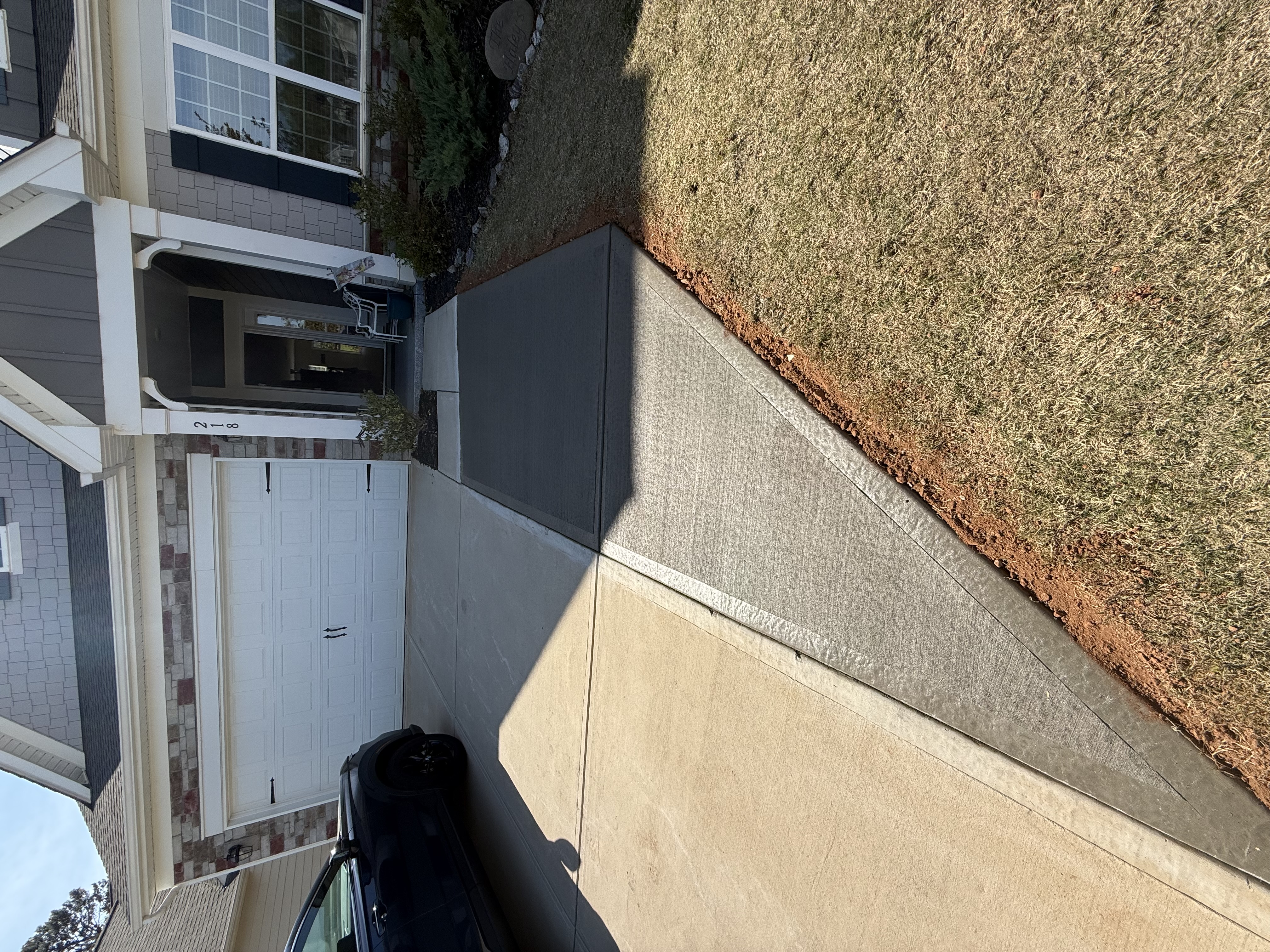
Paving
Recent Job
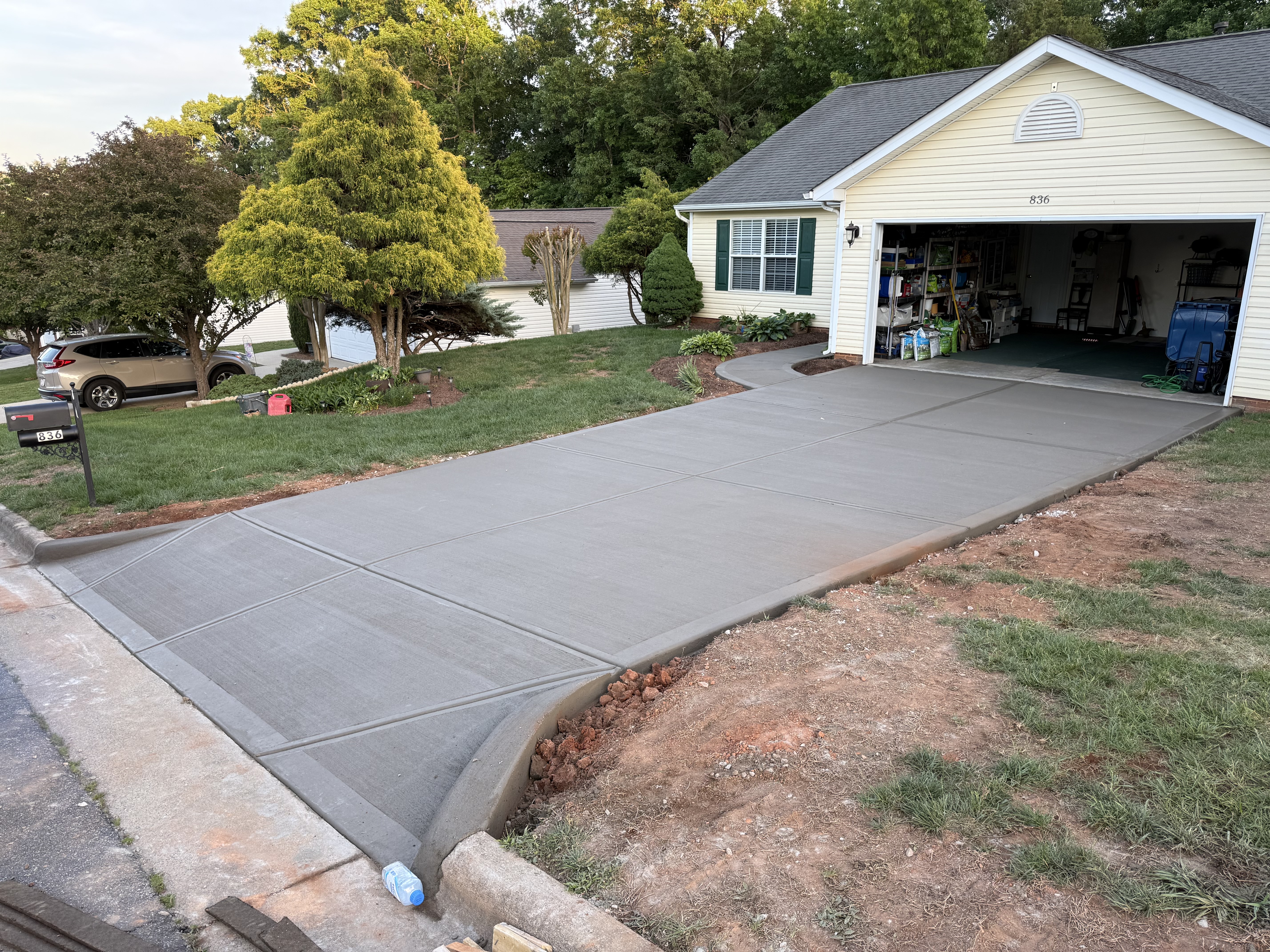
Paving
Recent Job
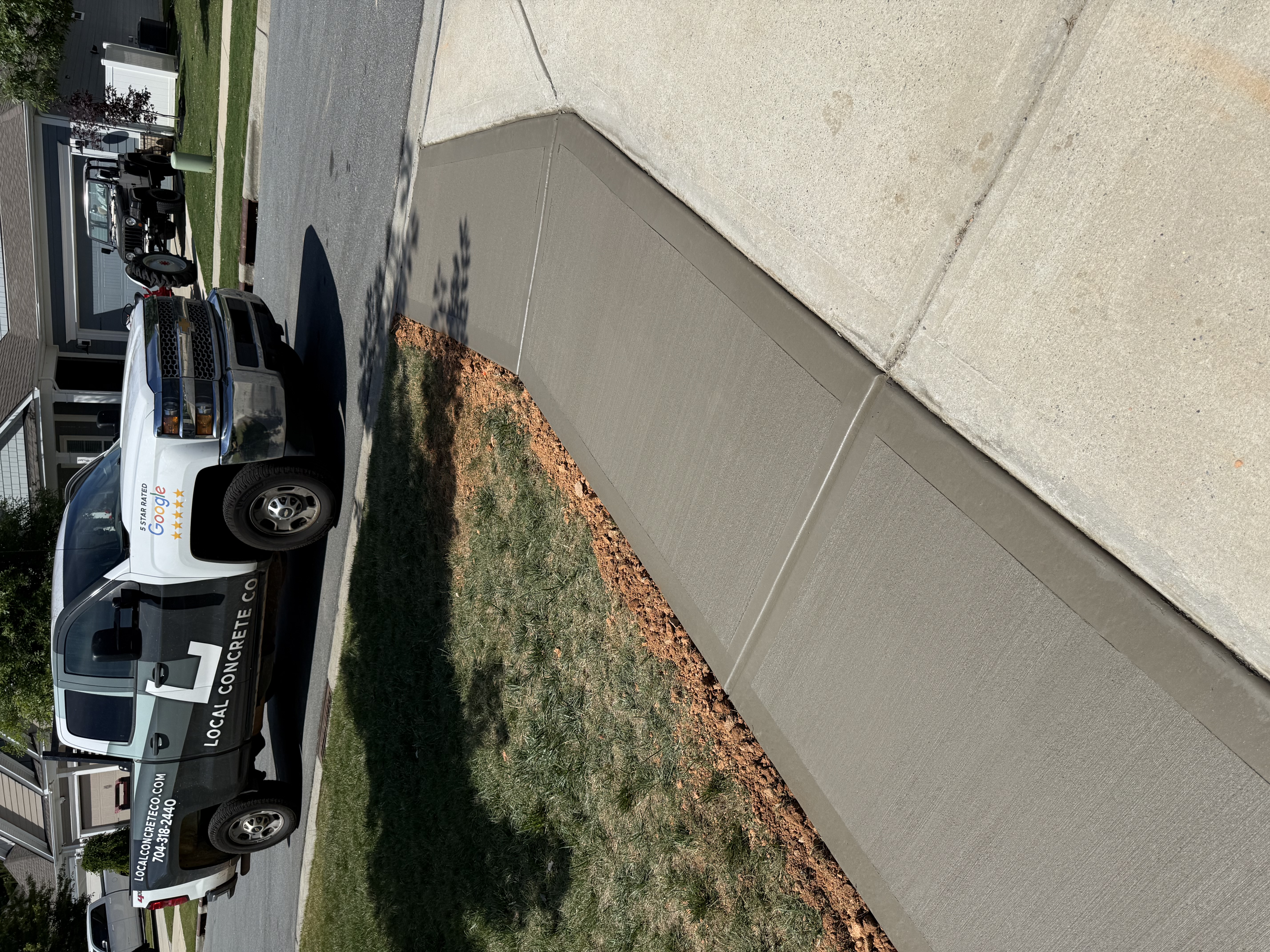
Paving
Recent Job
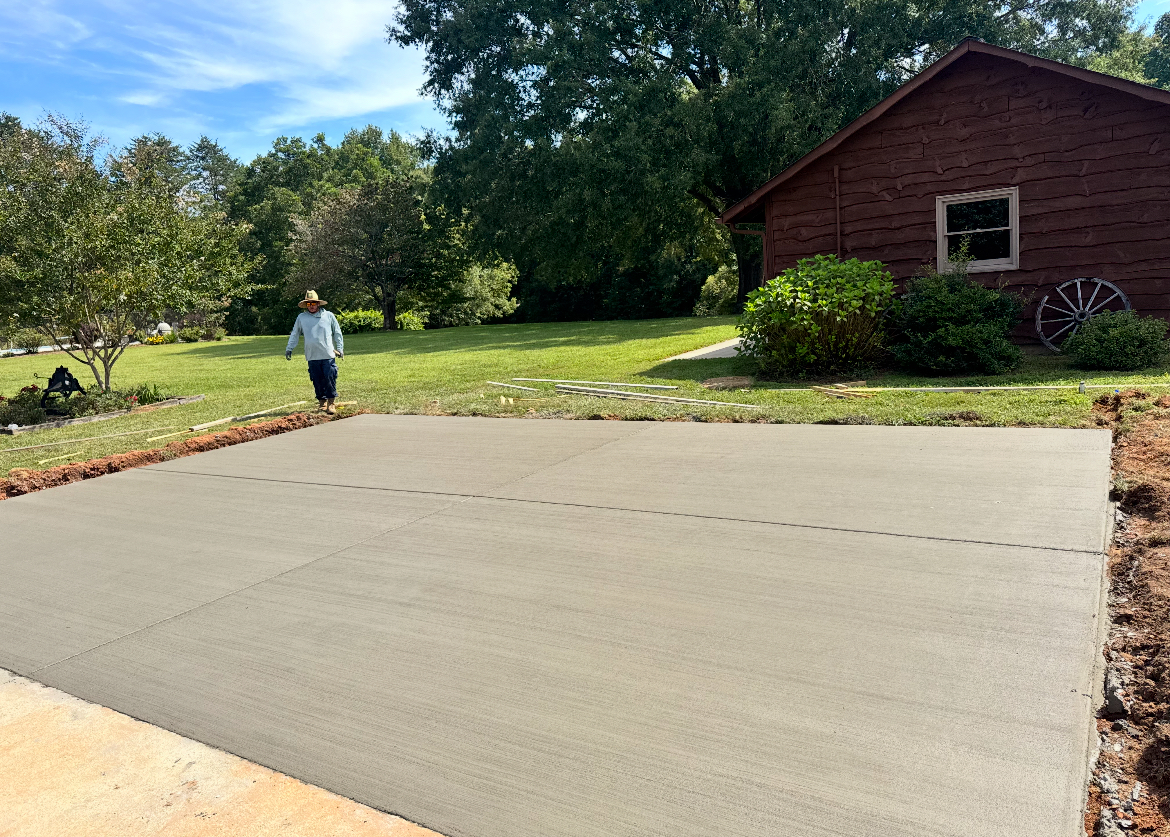
Paving
Recent Job
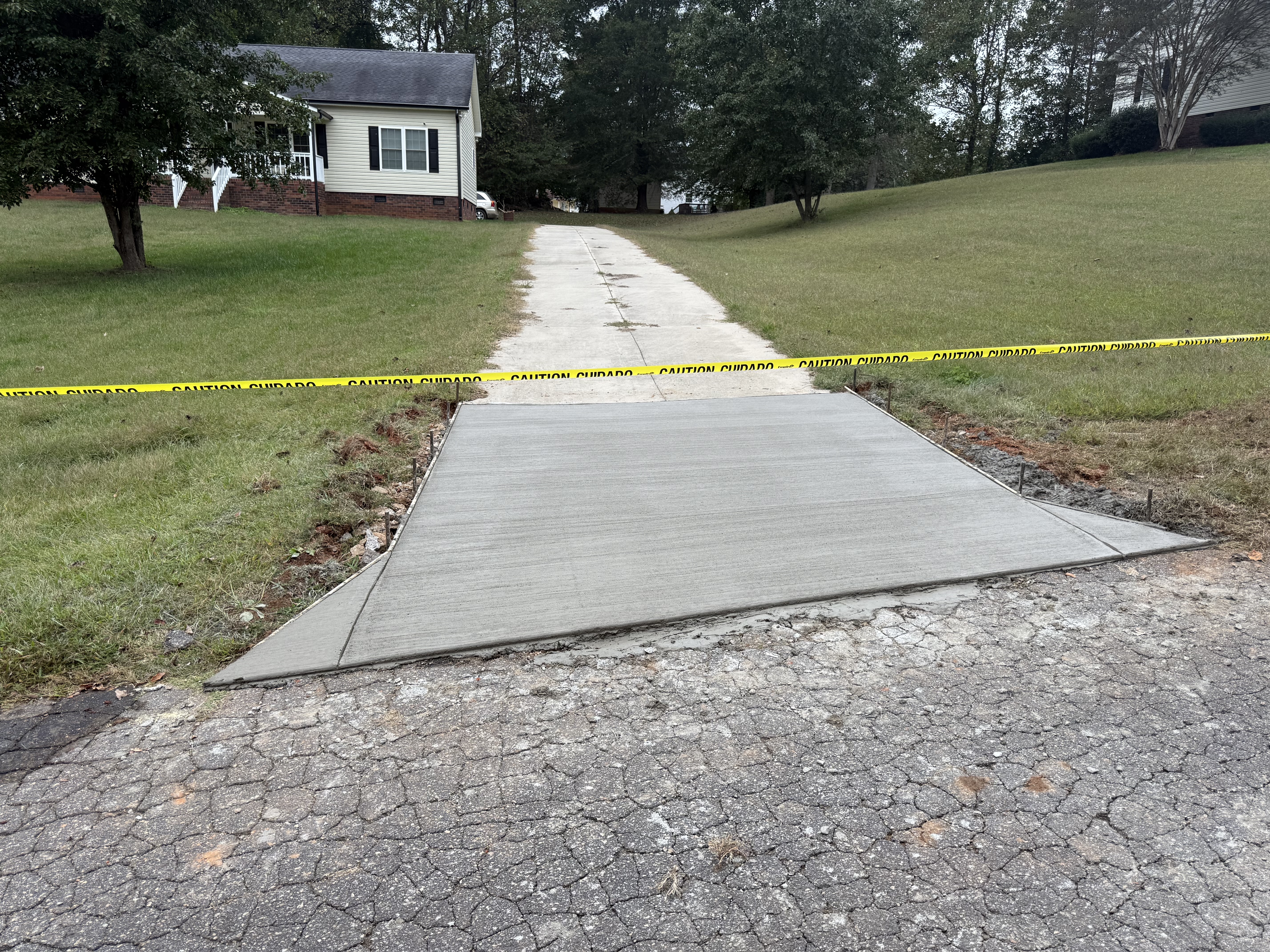
Paving
Recent Job
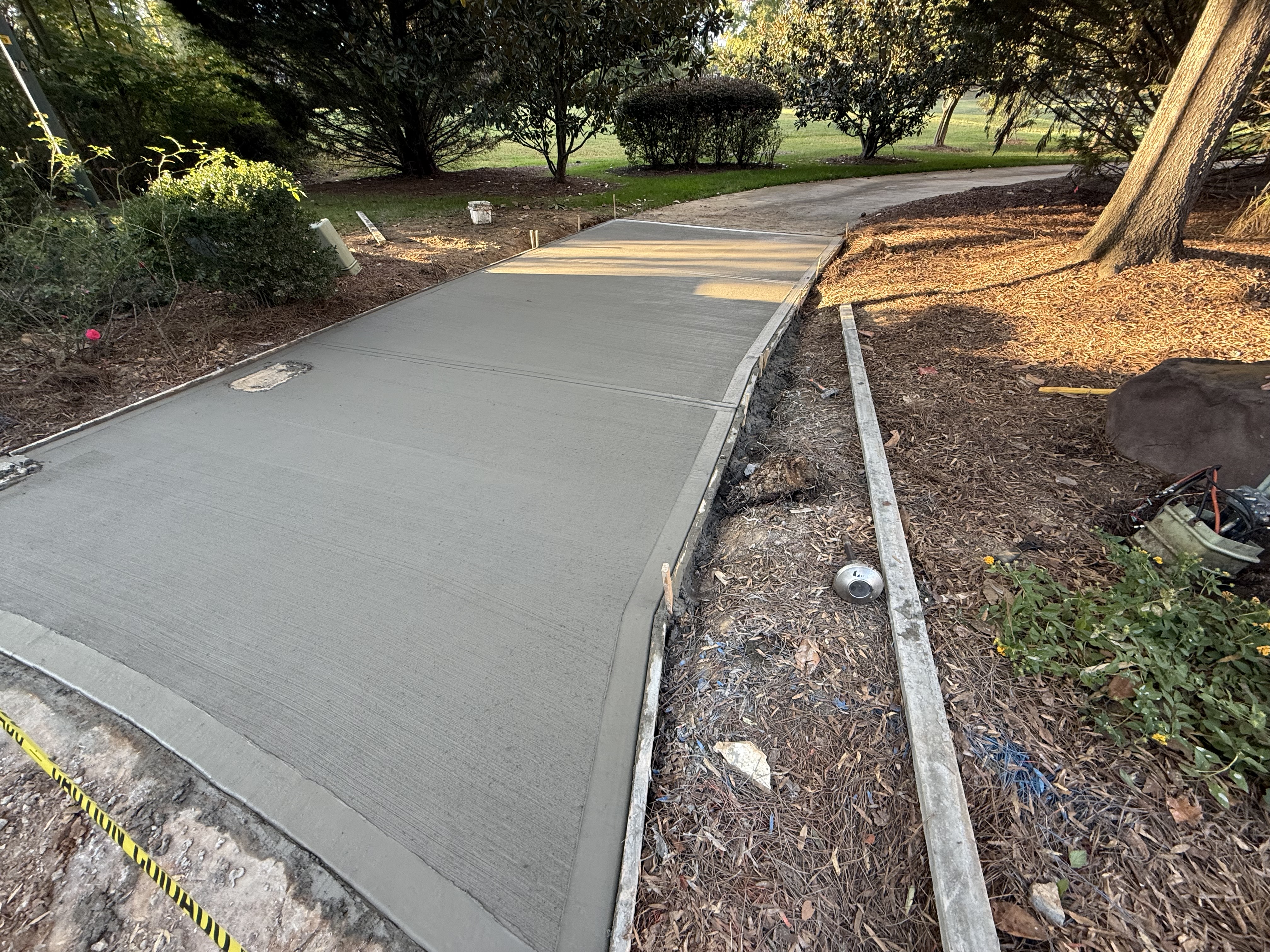
Paving
Recent Job
Real Projects We've Completed
A cross-section of our real project work — driveways, patios, porches, pool decks. Every pair below is a real Local Concrete Contractor install.
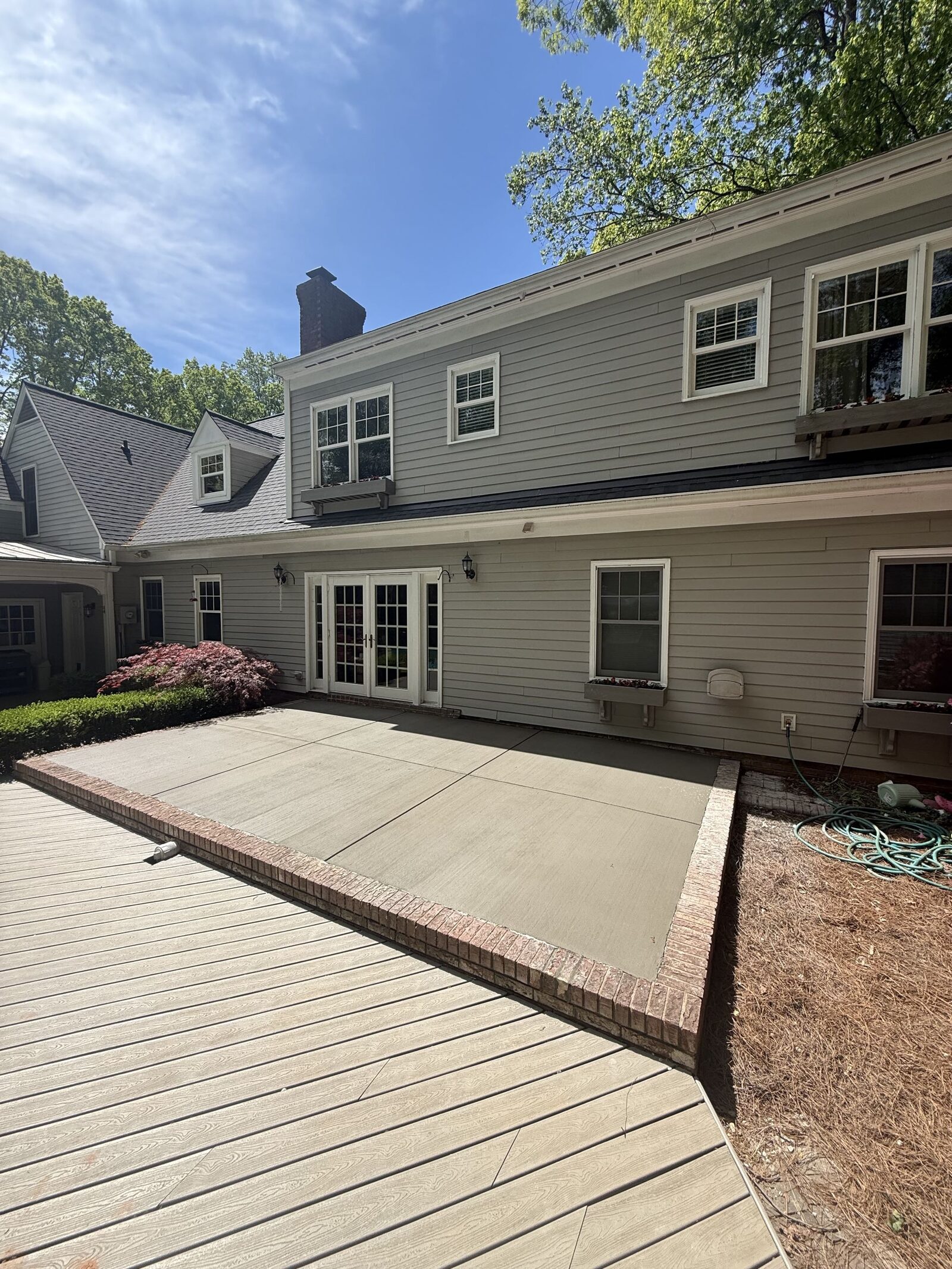

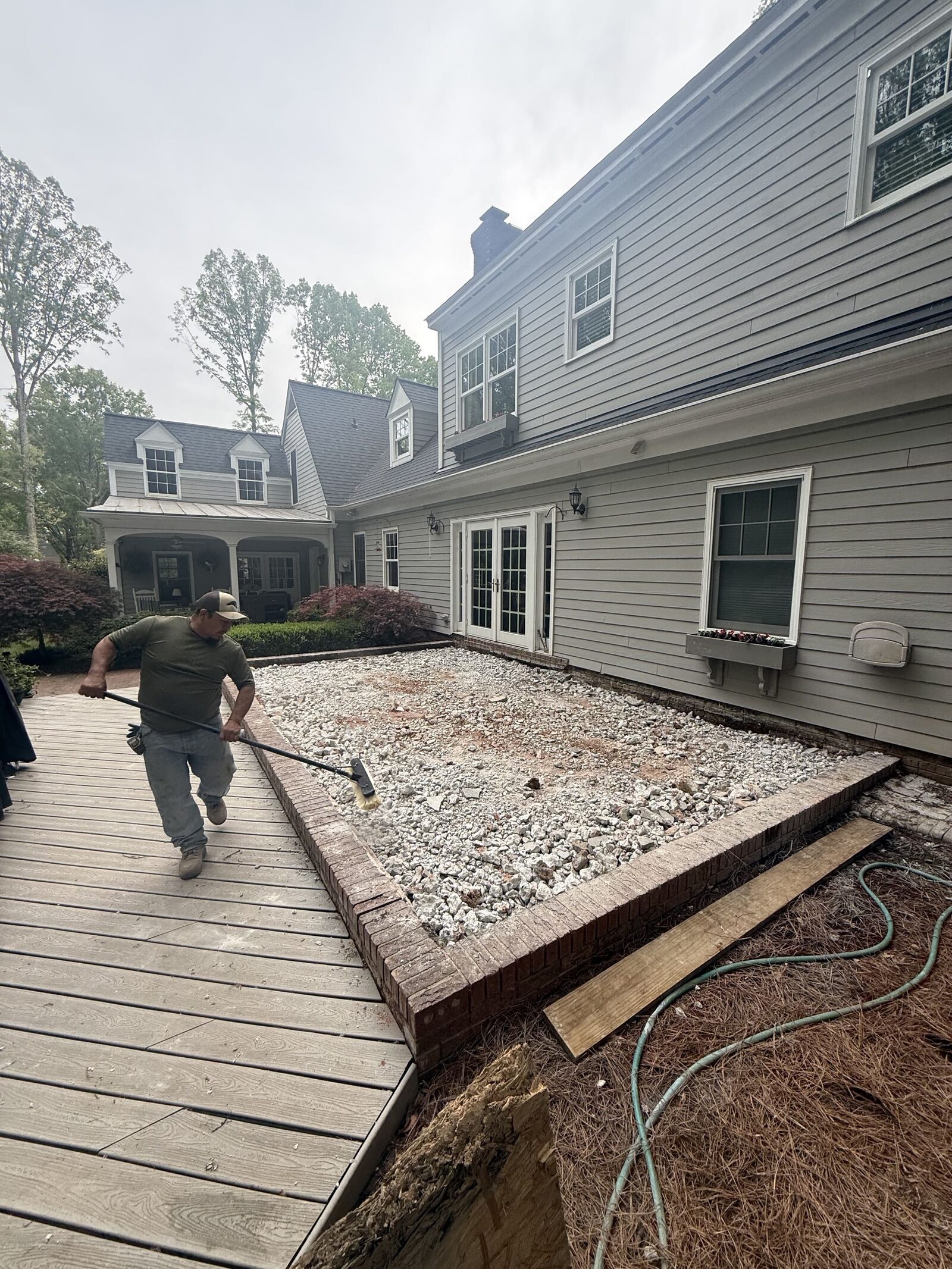
Backyard Patio
Full tear-out, new pour with brick-border detail
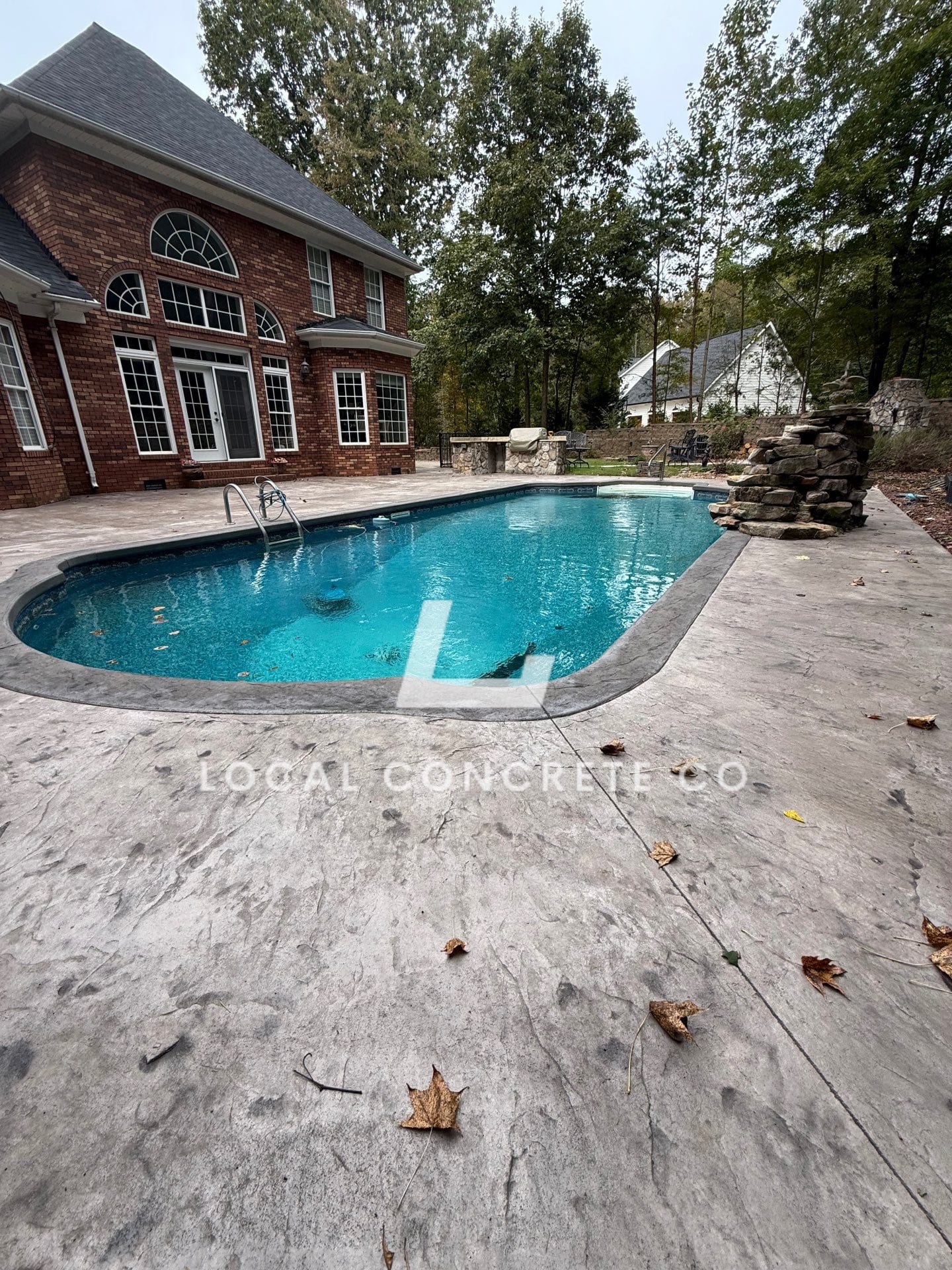
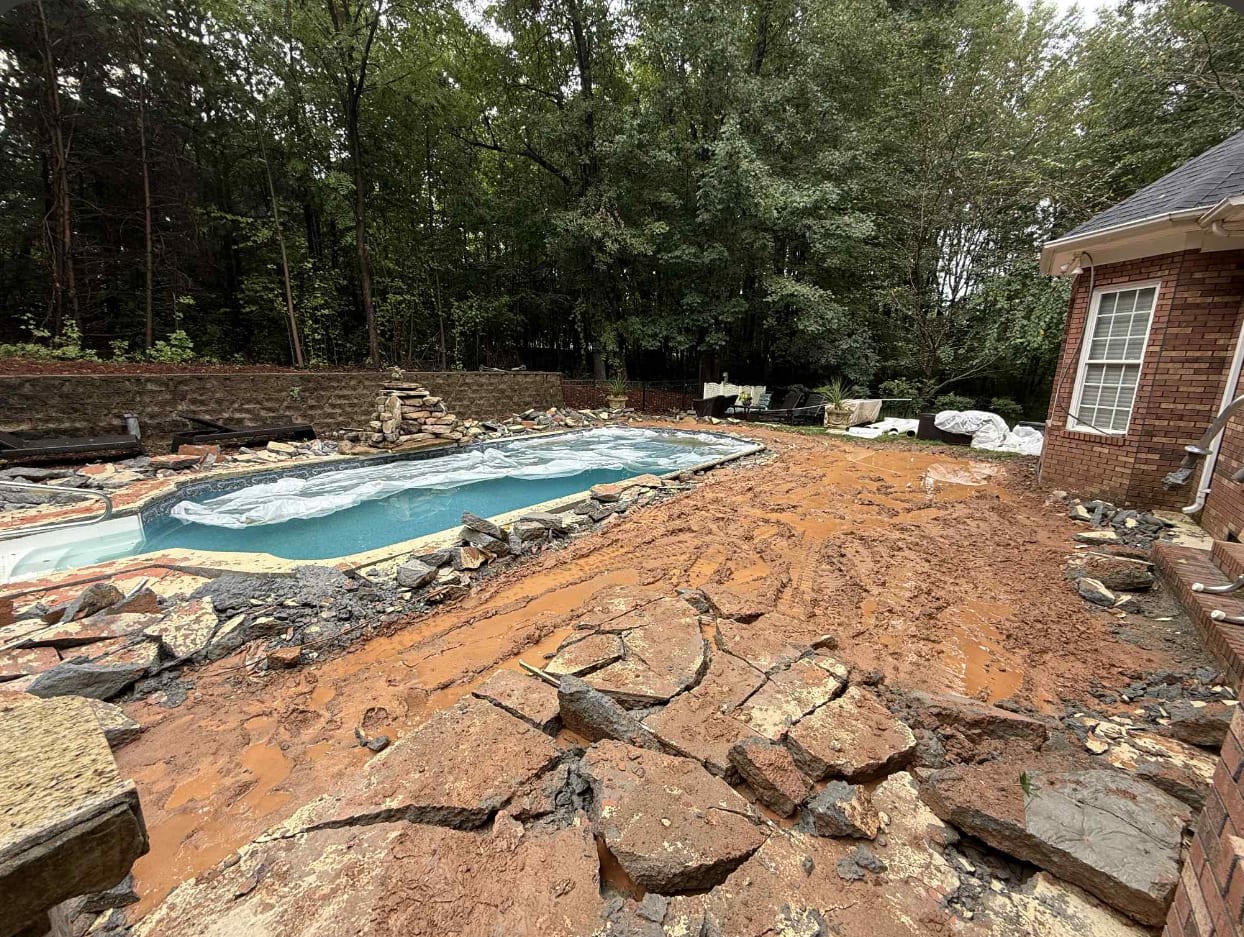
Stamped Pool Deck
Weathered deck replaced with textured stamped pour
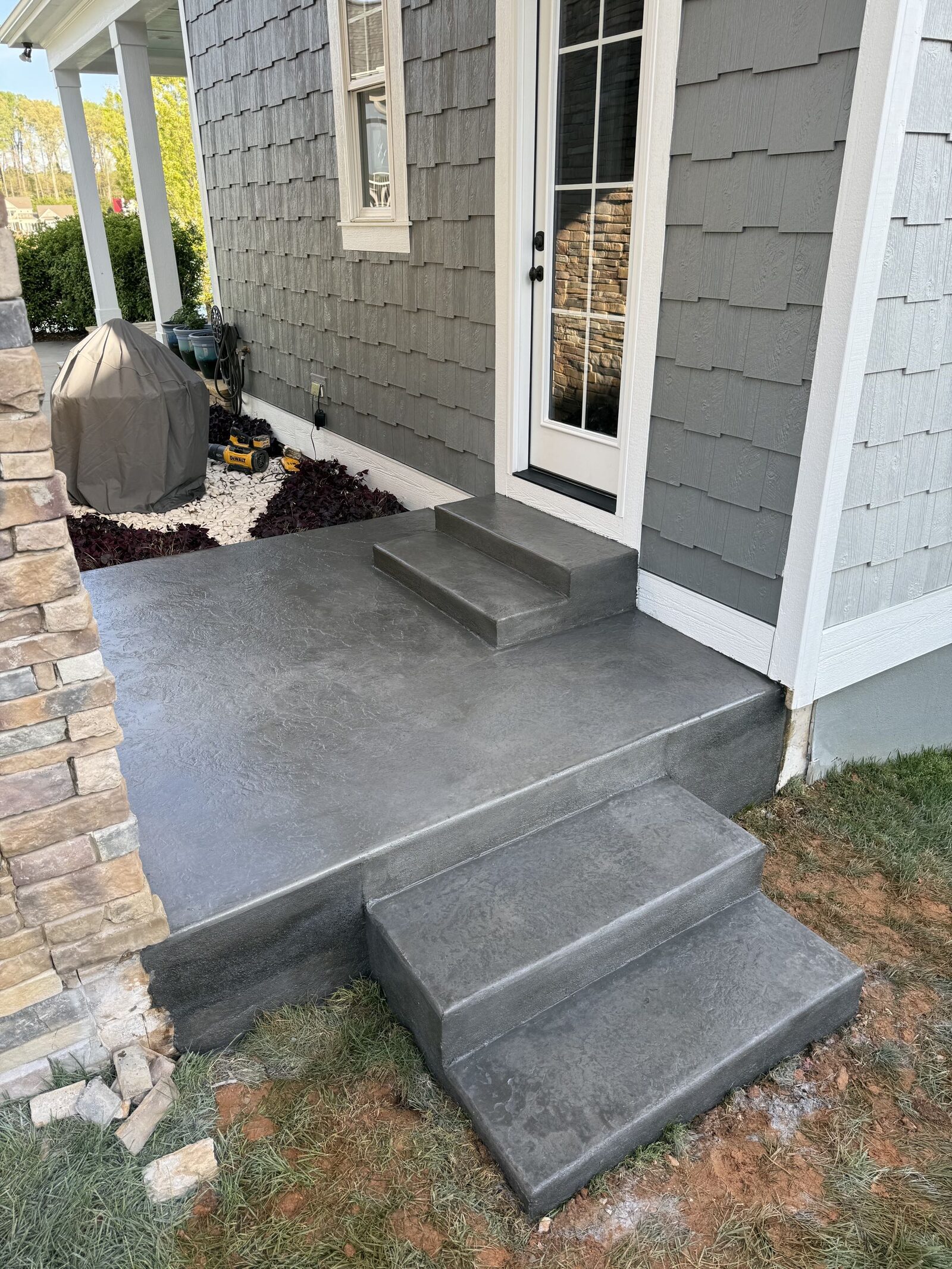
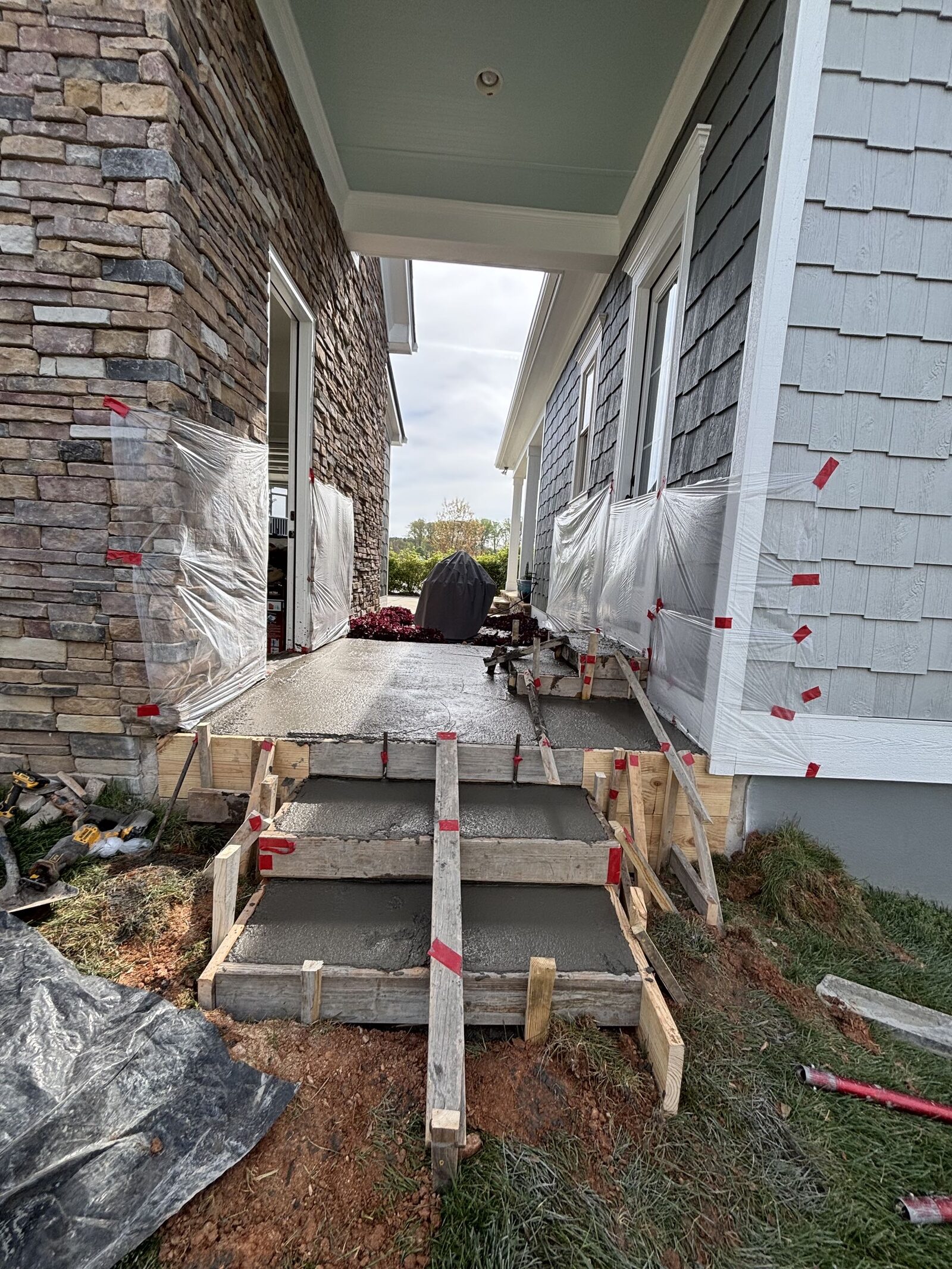
Front Porch & Steps
New entry pad plus poured steps to the door
A concrete parking lot lasts 30 to 40 years without a sealcoat rhythm. An asphalt lot the same size lasts 15 to 20 years and needs a sealcoat every 3 to 5 years just to hit that number. Across the North Carolina Piedmont, where the freeze-thaw cycle count and the summer surface temperatures both work against asphalt, the total-cost-of-ownership math on high-traffic paved areas usually favors concrete — even with the higher up-front pour cost. What makes it work is a jointed plain concrete pavement design built for the actual traffic class the lot will see.
Local Concrete Contractor paves parking lots, drive aisles, loading areas, and access roads across North Carolina — new pours, replacements where asphalt has failed, and concrete-over-failed-asphalt rebuilds. Every paving job starts with the same walk we do on any commercial pour: existing base condition, drainage, traffic class, tie-ins to public curb and gutter, and how the property owner or PM wants the lot phased so the tenant stays open. That turns into a written spec with mix design, thickness, joint layout, reinforcement, and cure plan. Zero deposit, licensed and insured, certificate of insurance goes to the GC or PM before we set forms.
Our Paving Services
Concrete paving covers a wider scope than most people think, and each application changes the thickness, mix, and joint layout.
- Full parking lot pours on new commercial construction
- Parking lot replacement where the existing lot (asphalt or concrete) has failed
- Drive aisles inside larger lots — the higher-traffic paths that take repeated wheel loads
- Loading areas and truck-approach zones with thickened slabs and dowel bars
- Access roads and driveways on commercial and industrial sites
- Fire lanes with reinforced load capacity for emergency vehicles
- Concrete-over-asphalt overlay where the base is sound but the surface has failed
- Concrete islands, medians, and landscape borders inside a paved lot
- Wheel-stop pours and integral tire-stop curbs at parking stalls
- Storm-water inlet surrounds tied into the paved surface
Parking lots and drive aisles usually get phased so half the lot stays operational while the other half cures. On tighter sites, we work overnight or across weekends to minimize the disruption. We'll walk the site and lay out the phasing plan before quoting.
Concrete Paving vs Asphalt: The Lifecycle Math
The right paving material for a commercial lot depends on how long you plan to own the property and how many wheel loads the lot will see. For high-traffic commercial areas across the NC Piedmont, the concrete-vs-asphalt math usually breaks in concrete's favor once you factor in the maintenance rhythm.
What concrete gives you:
- Expected service life of 30 to 40 years on a correctly built base, versus roughly 15 to 20 for asphalt
- No annual sealcoat cycle — asphalt needs a sealcoat every 3 to 5 years, and it accounts for a meaningful piece of the lot's lifecycle cost
- No annual crack-seal maintenance rhythm — concrete's control joints handle expansion; asphalt cracks and needs cold-patch or crack-fill every couple of years
- Load-bearing for heavy trucks, delivery vehicles, and repeated forklift traffic without rutting
- No summer surface softening — asphalt softens above 90 degrees and shows tire indentation in stationary parking; concrete doesn't
- Higher albedo (lighter surface) — meaningful heat-island reduction on large lots, and often a factor on LEED-track commercial construction
- Clean surface — no petroleum bleed onto vehicles or into storm runoff
Where concrete asks more up front: a higher initial pour cost, a 5-to-7-day cure window before vehicle traffic on standard mix, and a control-joint pattern that has to be cut early to steer cracking. For high-traffic commercial lots with a 20-plus-year ownership horizon, the lifecycle math almost always favors concrete.
Get your free quote
We respond in less than 2 hours.
0% APR for 21 months
Finance your concrete paving project through Hearth. Soft credit check, no impact on your score, ~60 seconds.
Why Local Concrete Contractor?
- 01.Precision craftsmanship
- 02.Transparent pricing models
- 03.Dedicated project manager
- 04.Zero Deposit Required
Our Concrete Installation Process
Every paving we pour runs through the same 18 checkpoints — from the on-site consult through the final walkthrough.
Consultation & Estimate
We meet on-site to assess scope, discuss vision, and provide a detailed, transparent quote tailored to your property.

Logistics & Scheduling
Coordinating crew, equipment, and weather windows to ensure a seamless project start.
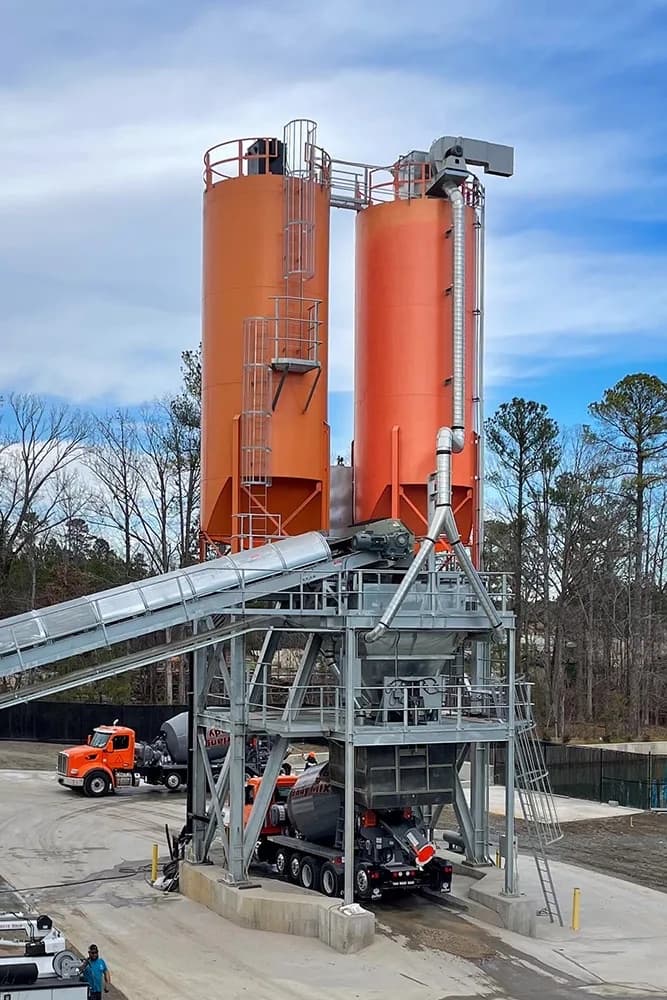
Custom Mix Design
Ordering specific concrete additives and slump requirements based on current temperature and humidity patterns.
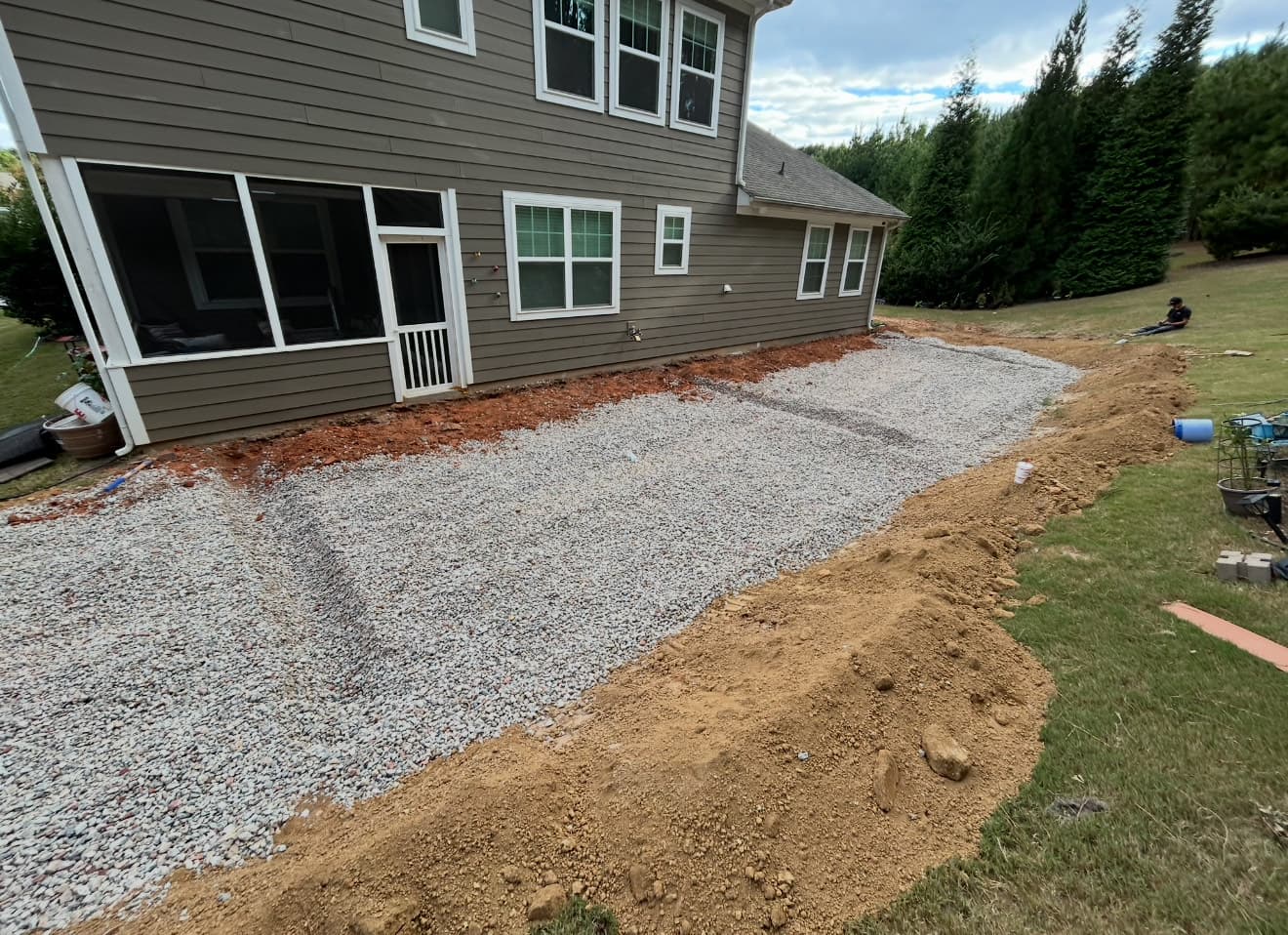
Site Preparation
Preparing the workspace and establishing safe access routes for our equipment and crew.
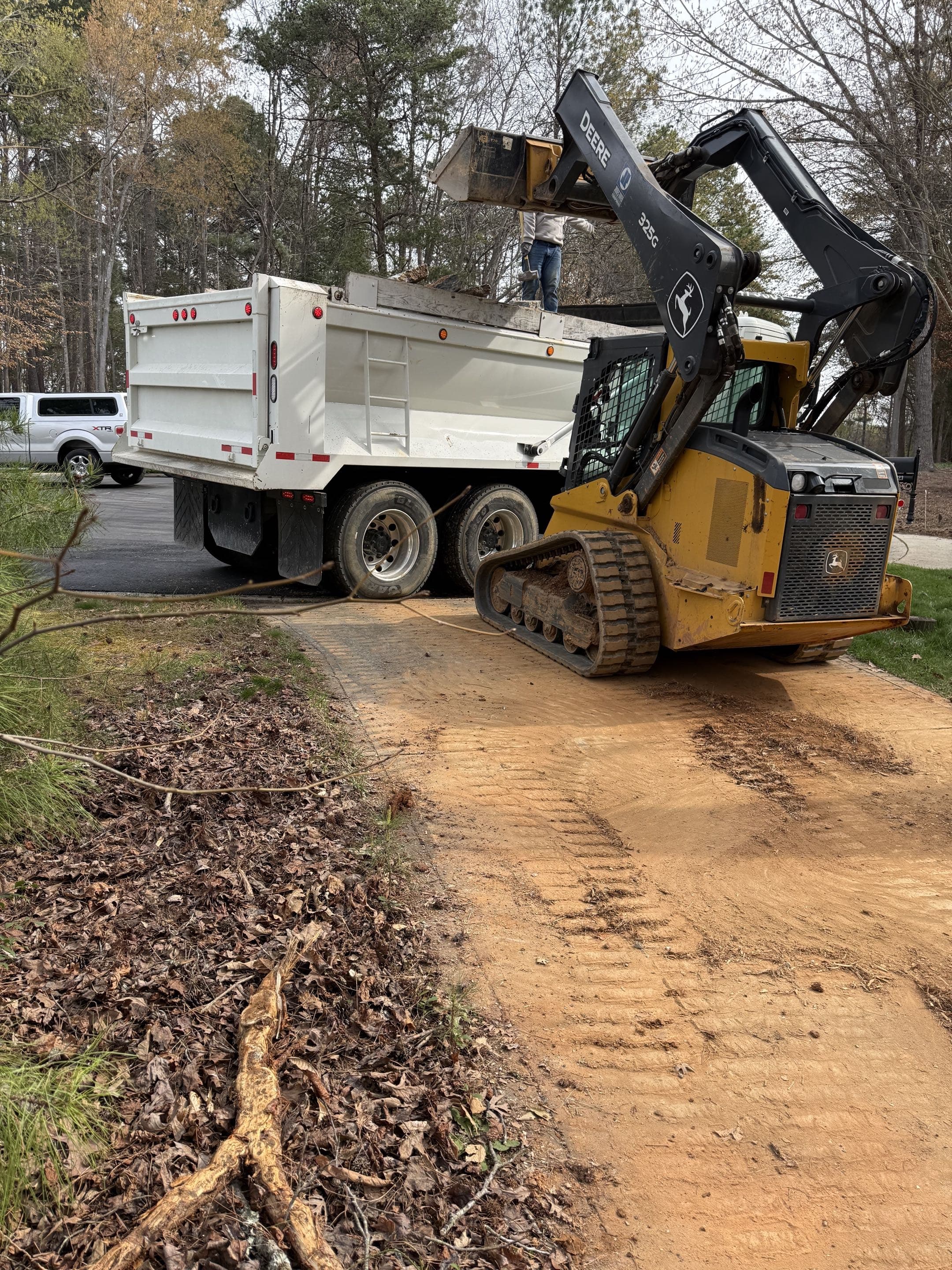
Demolition
Removal and disposal of existing concrete, leaving a clean slate for your new installation.
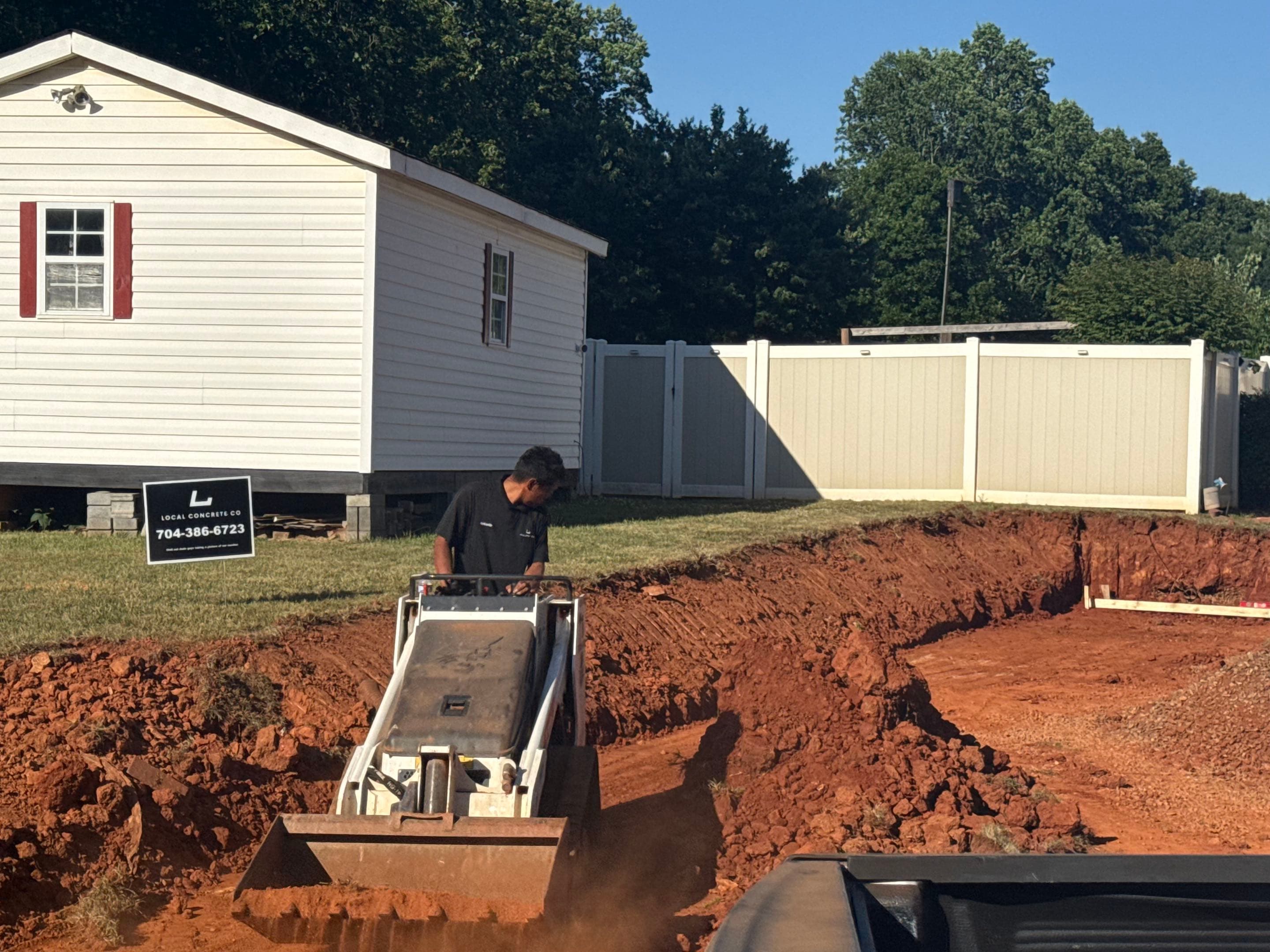
Grading & Forming
Expert grading for proper drainage and setting high-quality lumber forms for clean edges.
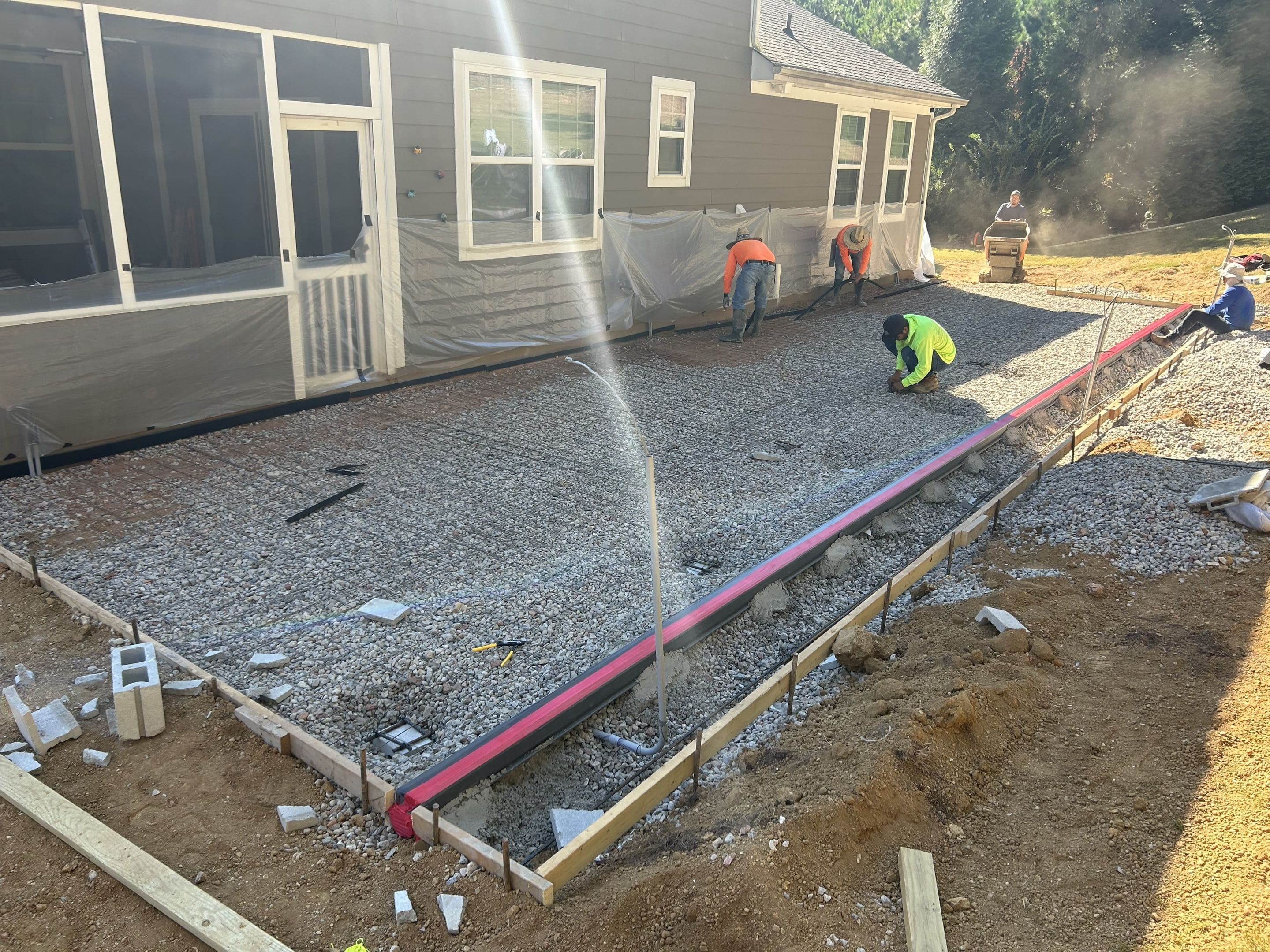
Reinforcement
Installation of steel rebar or wire mesh grid, using 1/2 inch grid for structural tensile strength.
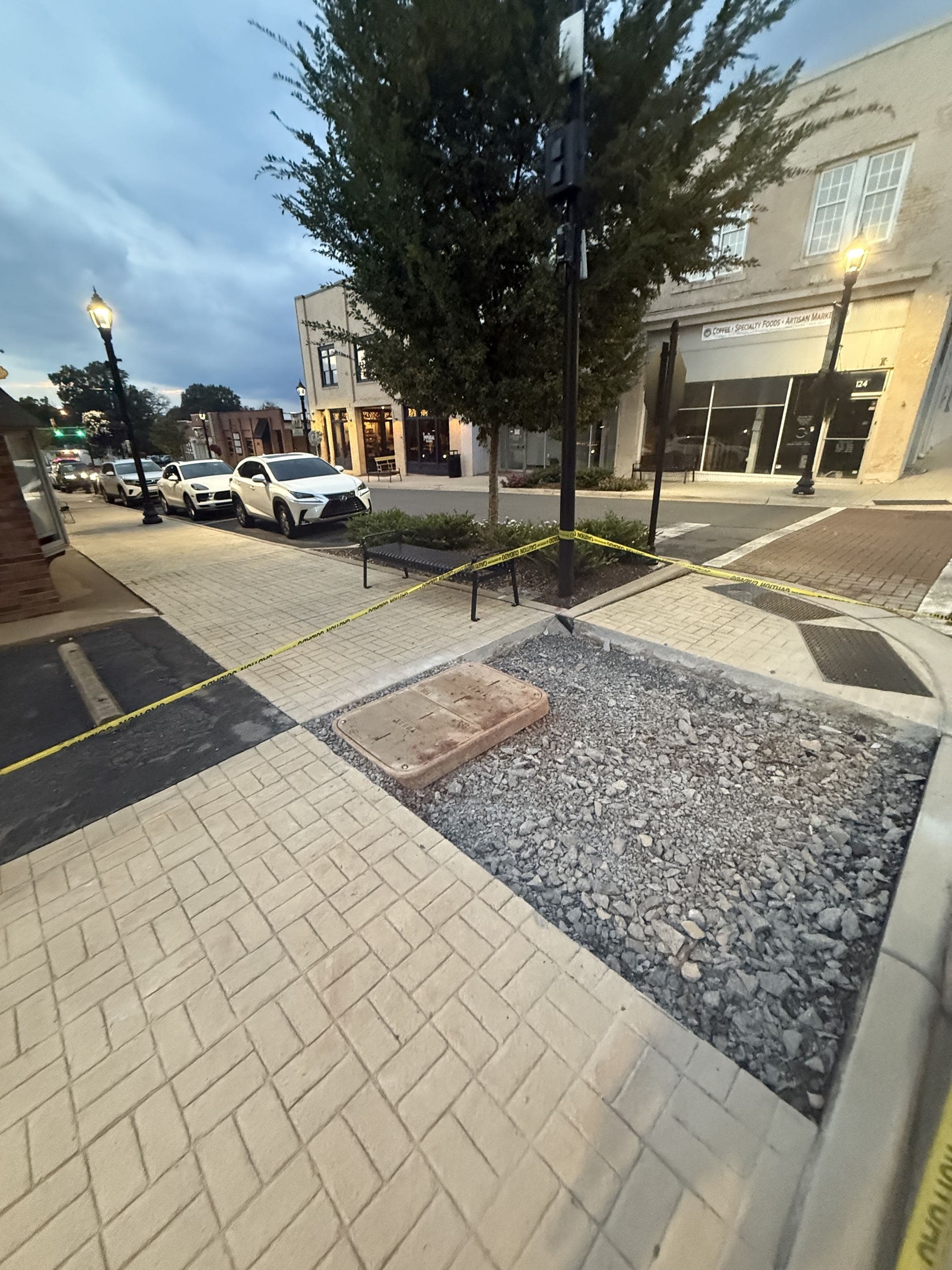
Pre-Pour Inspection
A final check of elevation, form stability, and reinforcement placement before the truck arrives.
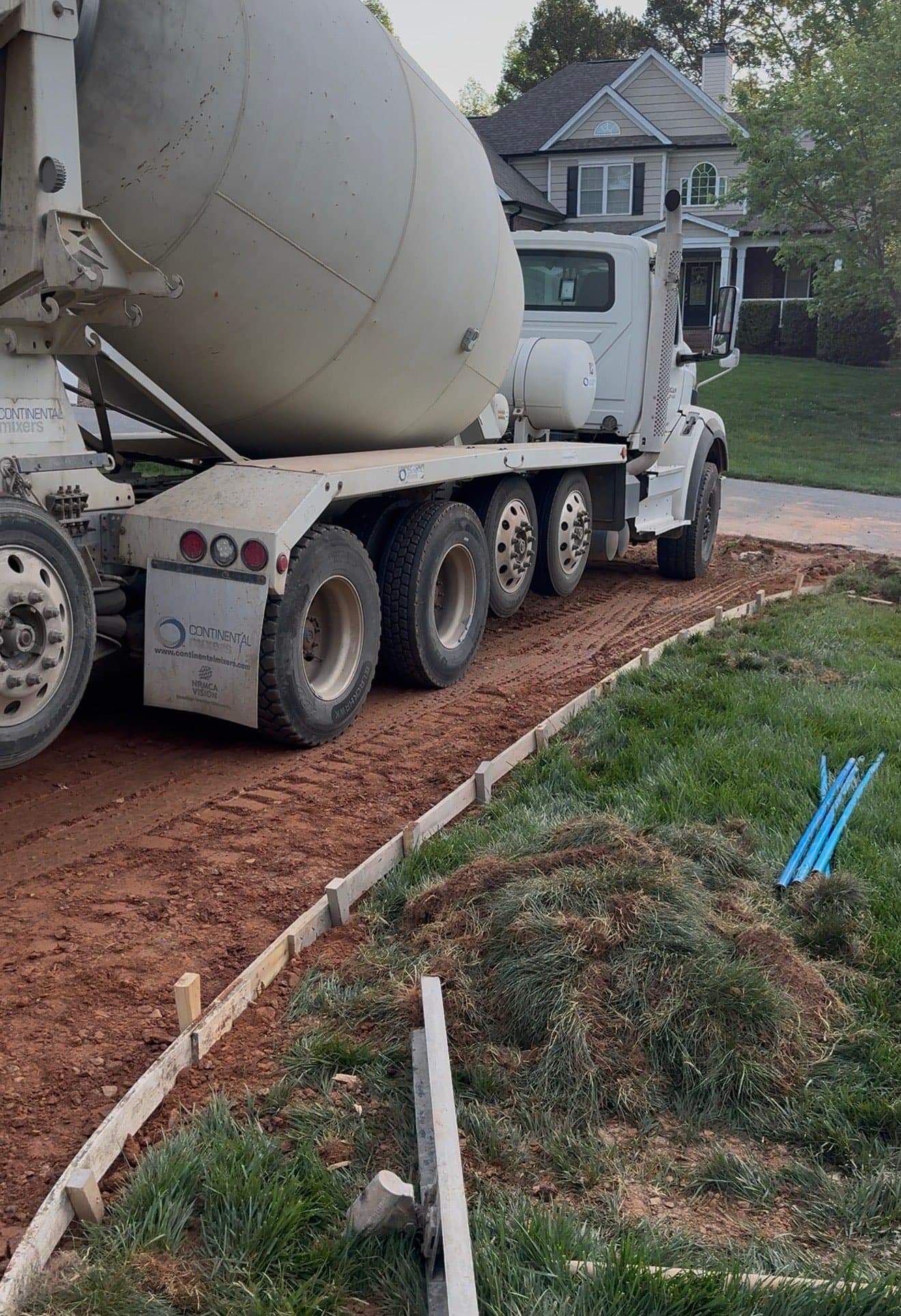
Slump Testing
Verifying concrete consistency on-site to ensure it meets the engineered mix design.
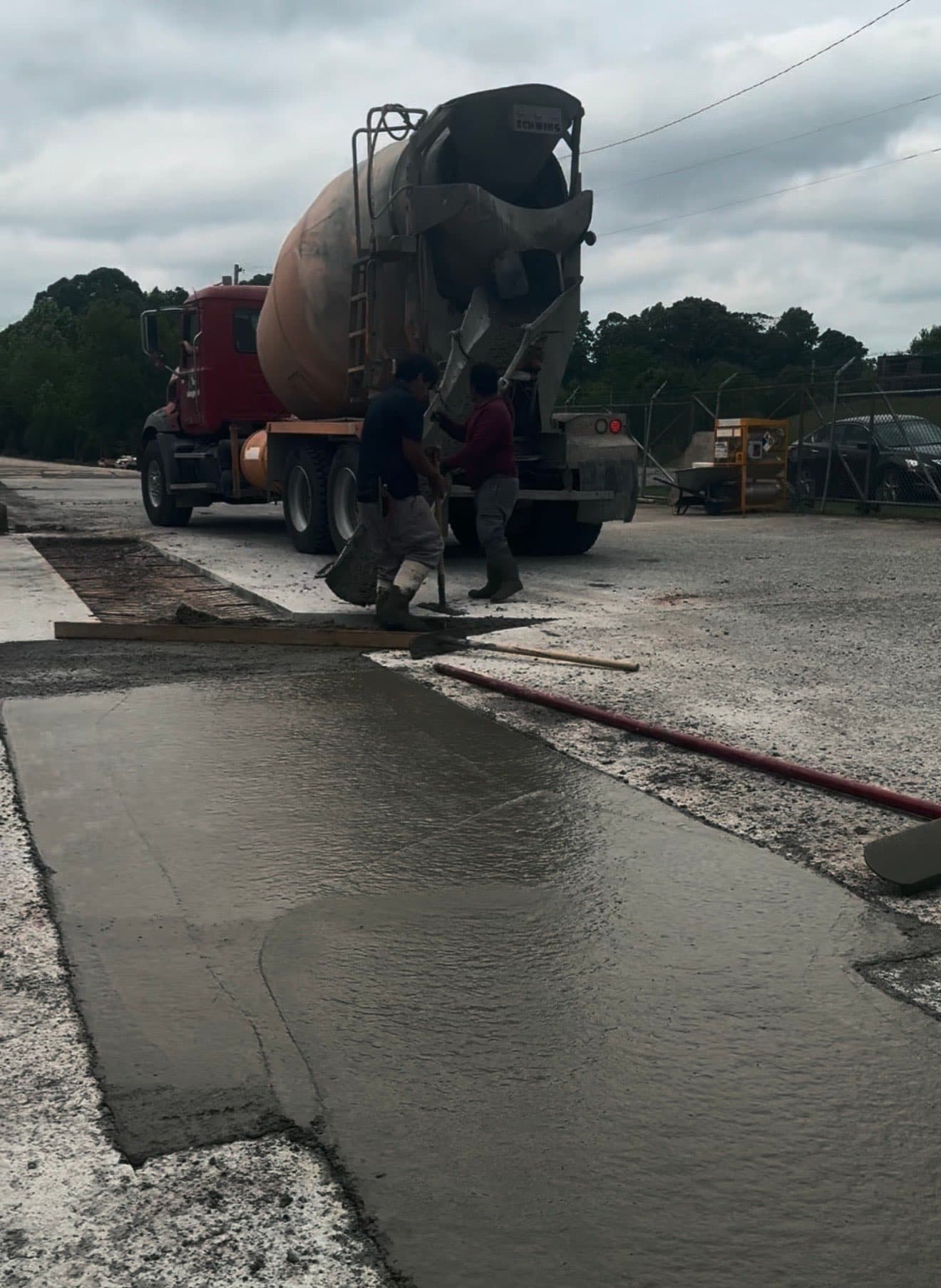
Placement
Controlled pouring and placement of concrete to avoid cold joints and ensure uniformity.
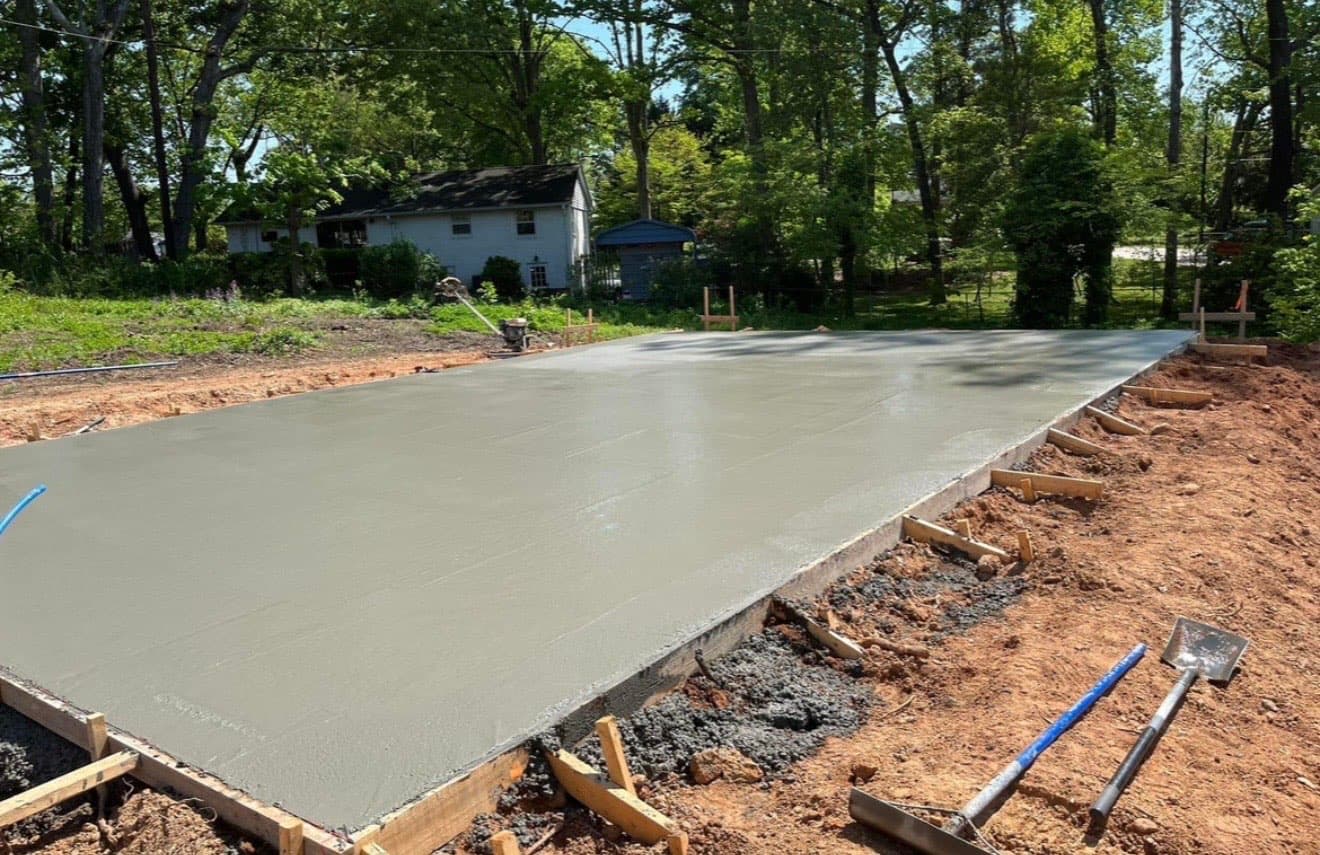
Bull Floating
Pushing aggregate down and bringing 'cream' to the surface for a smooth finishable layer.
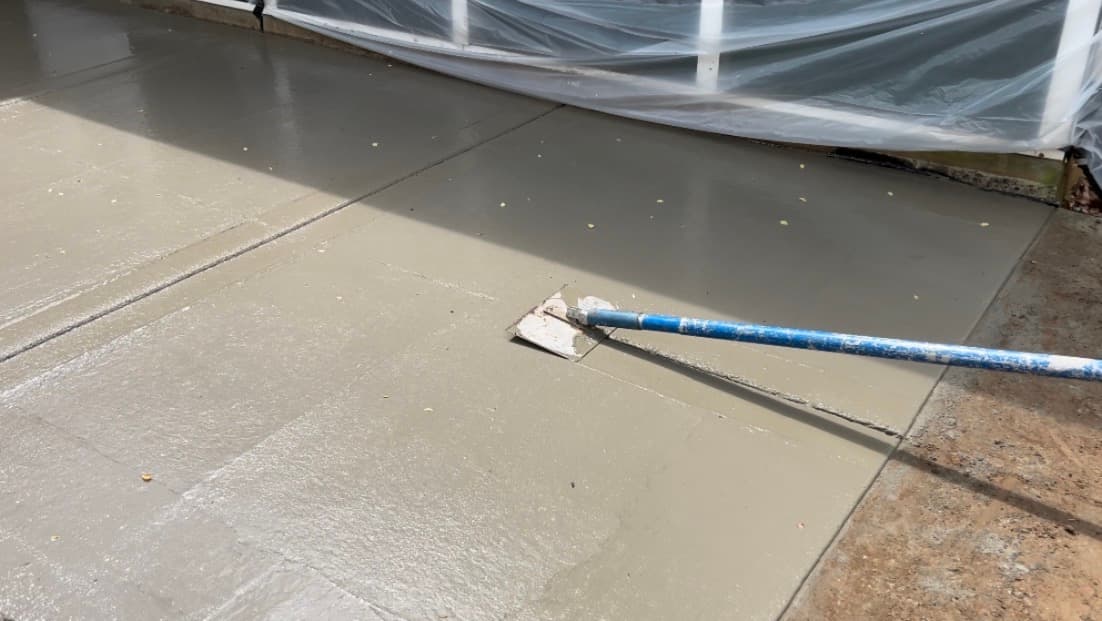
Edging & Jointing
Creating rounded edges for durability and cutting control joints to manage expansion.
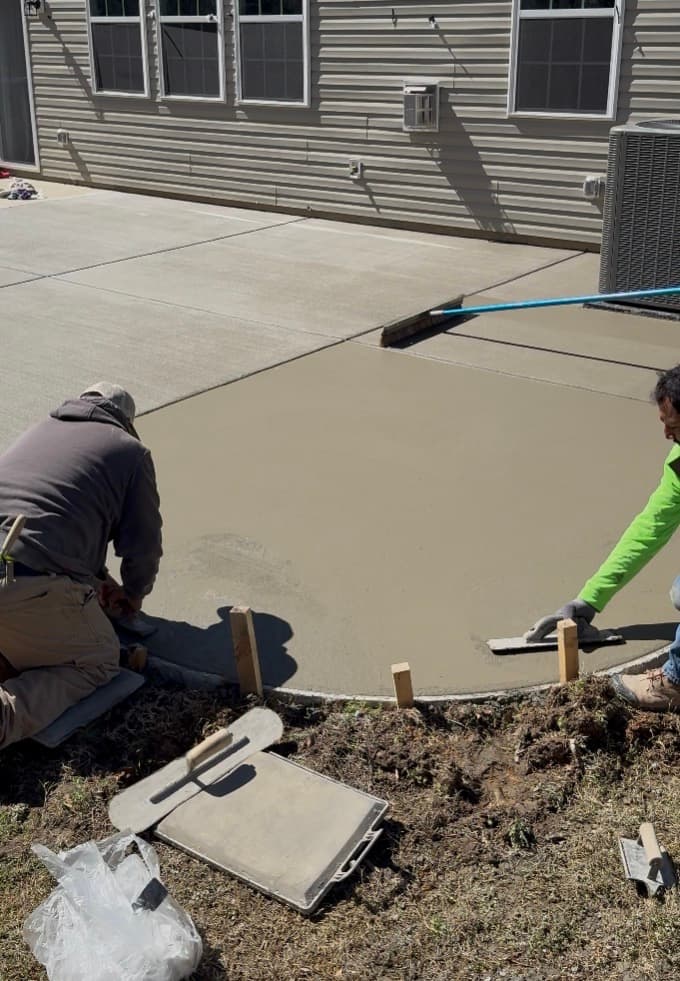
Fresno Finish
Final smoothing pass to close the surface pores and prepare for texturing.
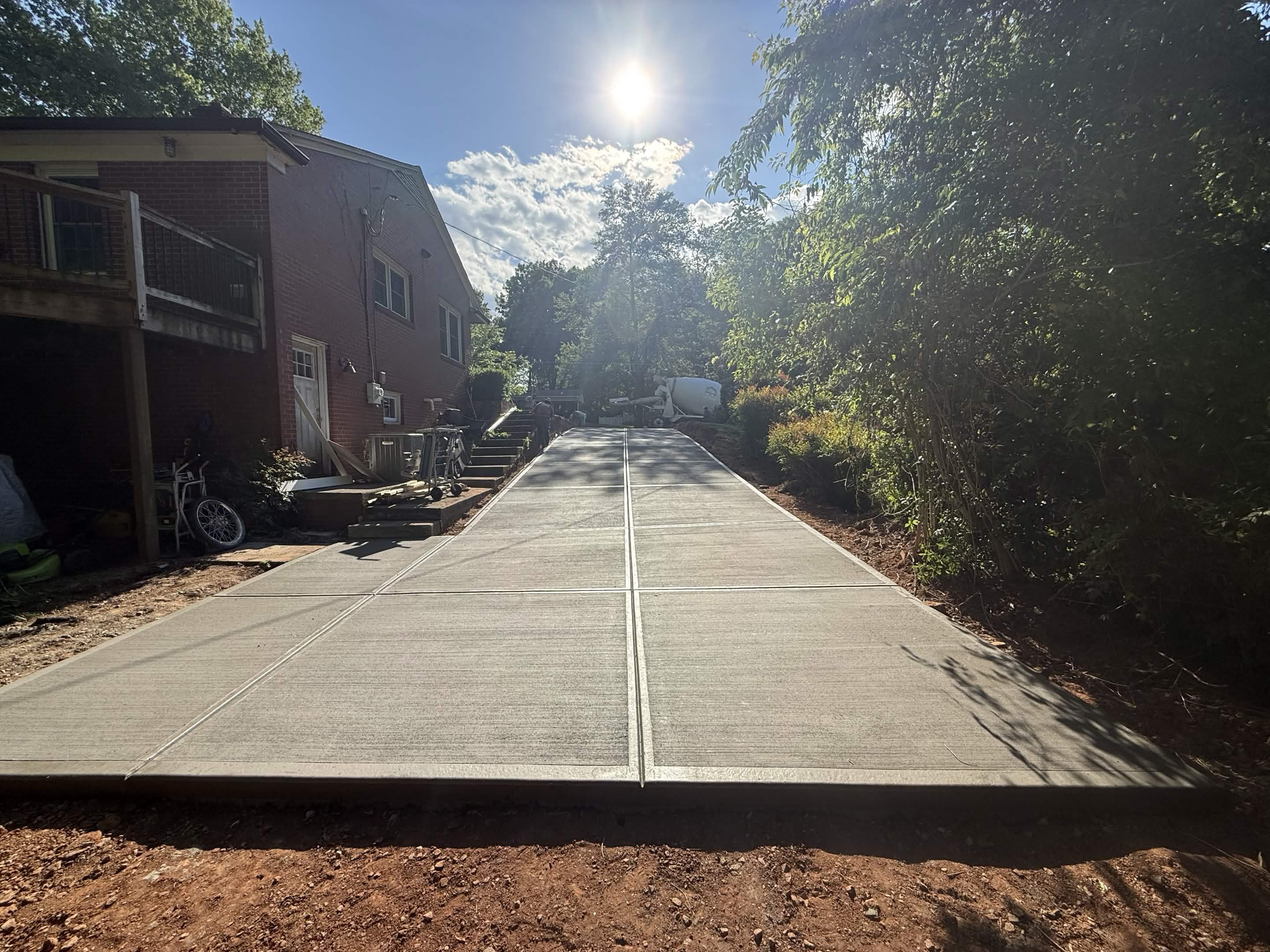
Decorative Detailing
Applying final broom texture, stamp patterns, or color treatments as specified for your project.
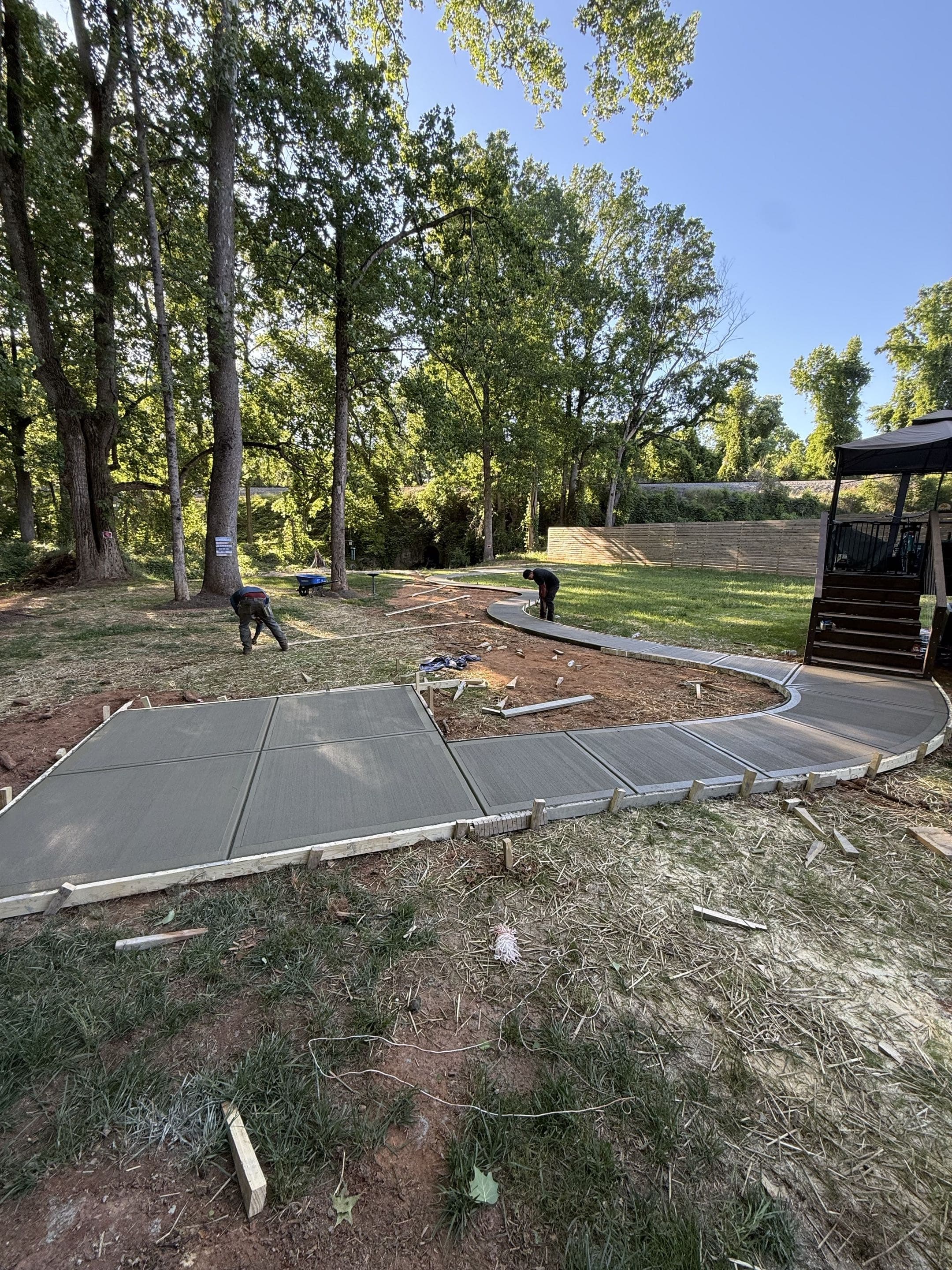
Form Removal
Careful stripping of forms once concrete has reached initial set stability.
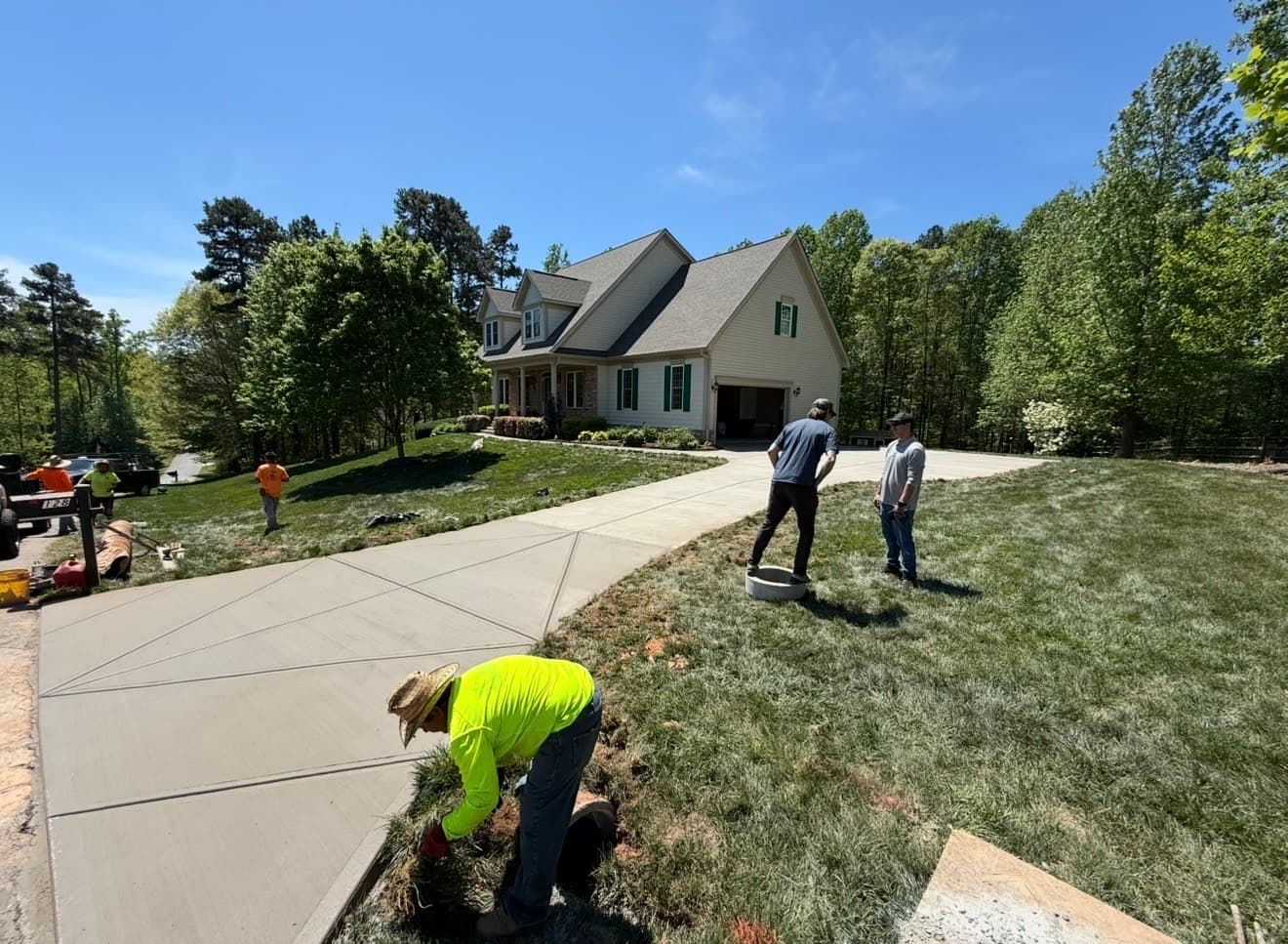
Final Walkthrough
Reviewing the finished project with you to ensure every detail meets the standard.

Usage Guide
Providing clear instructions on cure times — when you can walk, drive, and park on your new concrete.
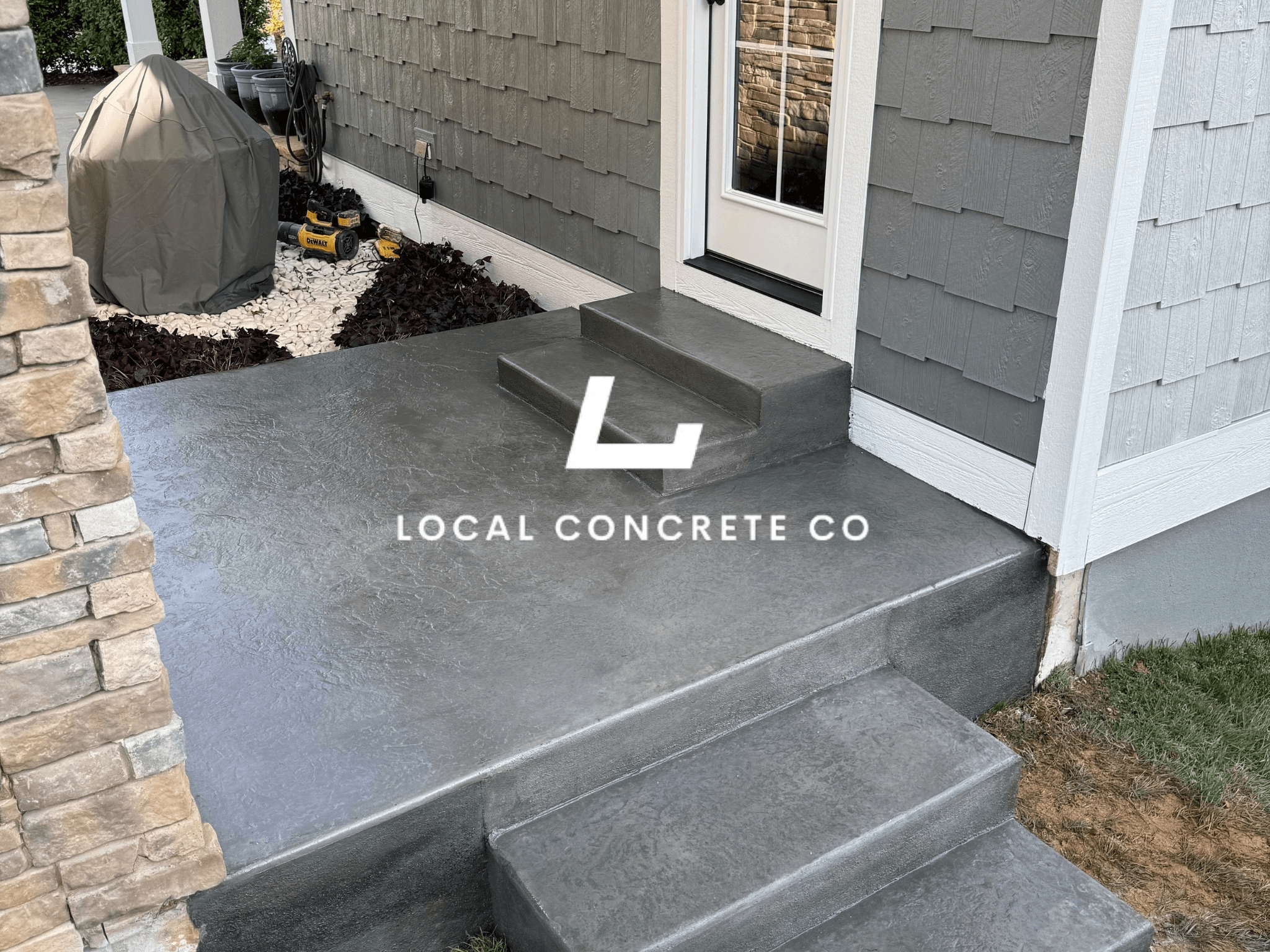
Project Completion
The job is done right, ensuring you have a durable surface for years to come.
JPCP Design: Thickness, Joints, and Reinforcement
Jointed plain concrete pavement (JPCP) is the standard design approach for commercial paving. The spec details — thickness, joint spacing, dowel-bar layout — all get set by the traffic class and the base condition. Get any of them wrong and the lot spider-webs inside a few years.
- Traffic class — cars and pickups (Class A), light trucks and delivery vans (Class B), loaded semis and heavy trucks (Class C or higher); the class sets the thickness
- Thickness by class — 5 to 6 inches for Class A parking, 6 to 7 inches for Class B drive aisles and delivery approaches, 7 to 8 inches or thicker for Class C loading areas and truck-turning zones
- Mix design — 4000 PSI air-entrained is standard for exterior paving in the NC Piedmont; 4500 to 5000 PSI at heavy-truck approaches
- Base — 4 to 8 inches of compacted ABC stone on a proof-rolled subgrade; geotextile fabric where the native soil is heavy clay; the base often ends up thicker than the concrete
- Joint spacing — control joints sawed at roughly 24 times the slab thickness (a 6-inch slab gets joints every 12 to 15 feet); joints run in both directions to make square or slightly-rectangular panels
- Dowel bars — smooth steel dowels across construction joints in high-traffic areas transfer load between panels and prevent differential settlement
- Joint sealant — installed in every control joint to keep water and debris out of the joint
- Drainage crown — the lot has to slope to positive drainage, typically at 1 to 2 percent across the paved surface toward inlets and curbs
We design the paving spec around the lot's actual traffic mix — a retail lot with occasional delivery trucks doesn't need the same design as an industrial site with daily semi traffic. Over-spec'ing costs money; under-spec'ing costs the pour.
When to Replace, Not Overlay
Failed asphalt lots and failing older concrete lots both have a decision point where an overlay stops making sense. When these show up on a lot, the replacement pour almost always wins the 10-year math.
- Widespread alligator cracking on asphalt — points to base failure under the pavement; a mill-and-overlay on a failed base fails again inside a couple of years
- Rutting deeper than half an inch in drive aisles — asphalt has lost its structural capacity, and an overlay just moves the rut into the new surface
- Standing water in low spots on a lot that used to drain — subgrade has moved, and any overlay follows the failed geometry
- Concrete lot with map cracking across multiple panels — the mix or the joint layout was wrong; patching the panels one at a time doesn't fix the underlying issue
- Loading area with settled slabs at the truck approach — base loss under the highest-load zone; the load will move to the next panel and repeat the failure
- Concrete lot past its 30-year service life with multiple failing panels — the 10-year math typically favors a full replacement over ongoing spot repair
- Asphalt lot with utility cuts that never sealed properly — every cut is a water infiltration point, and the lot ages faster than its remaining service life shows
- Concrete over failed asphalt as a rebuild path — often more cost-effective than a full tear-out-and-repave when the underlying base can be salvaged
We'll write both quotes — targeted repair and full replacement — when the call isn't obvious. The 10-year outlook usually makes the choice clear.
Why Property Managers and Business Owners Work With Us
Local Concrete Contractor paves commercial lots across the North Carolina Piedmont and out into the coastal plain. Paving is the highest-visibility improvement on most commercial sites — the lot is what customers see first — and it's usually one of the largest capital line items on a property's budget. We work to make both sides of that equation come out right.
What that looks like on your paving job:
- Zero deposit — you pay after the pour is finished, cured to the return-to-service milestone, and walked with you, the GC, or the PM
- Free on-site quotes with the written spec: mix design, thickness, joint plan, dowel-bar layout, cure schedule, phasing plan
- Licensed and insured — certificate of insurance naming the property owner and GC as additional insured, delivered before mobilization (commercial-required, not optional)
- Phased pour scheduling so half the lot stays operational while the other half cures
- After-hours and weekend pours available on tighter sites where downtime has to be minimized
- Real photos of prior paving jobs in the region — retail lots, industrial sites, drive aisles, loading areas — not stock images
- Straight answers on the cost drivers (thickness, base condition, traffic class, jointed vs continuously reinforced, striping coordination) so the number is explainable
- Same crew from base prep through final finish — no subbing the finish out
If you're comparing paving quotes, ask each contractor what the traffic class is, what the joint spacing is, and how they'll transfer load across construction joints. Those three answers separate a lot that lasts three decades from one that starts spider-webbing inside five years.
Paving
FAQ
Straight answers on paving installation — thickness, base prep, cure time, deposit, and what it takes to make the slab last.
Get Free QuoteHow long does a concrete parking lot last?
A properly designed concrete parking lot lasts 30 to 40 years across the NC Piedmont, versus 15 to 20 for asphalt. The service life comes down to four things: subgrade compaction and base thickness, slab thickness matched to the traffic class, joint layout that steers cracking, and drainage that keeps water off the base. No annual sealcoat, no crack-fill rhythm — the maintenance cost across the life of the lot is dramatically lower than asphalt.
How thick should a concrete parking lot be?
Do concrete lots need control joints?
Can concrete be poured over existing asphalt?
How long before we can drive on new pavement?
Do you handle striping and signage?
Ready to talk about your project?
Free estimate. No pressure, no sales tactics. Zero deposit.
Get Free Quote